

Wauraltee Beach camping: Bush Campground Guide and Fees

Latest update: September 2026
We’ve camped twice now at Wauraltee Beach, in 2022 right on the beach and again after the rules changed.
There’s something about waking up near the water. Stepping out of your tent straight onto soft sand, brewing your coffee with an ocean view. It’s the kind of campsite you dream about.
Wauraltee Beach on the Yorke Peninsula is still one of our favourite places in South Australia to do exactly that. What’s changed is where you sleep. Since early 2025, you can no longer camp on the sand itself. But the bush campground behind the dunes is open and now costs $20 per night.
Here’s everything we’ve learnt from camping here: the four camping areas and which one to aim for, what the permit actually costs, and how to book it, the road you need to take (and the one to avoid), what’s there and what isn’t, and what you can still do on the beach.
➤ If you’re heading this way, start with our complete Yorke Peninsula Travel Guide & 5-Day itinerary.
Where is Wauraltee Beach?
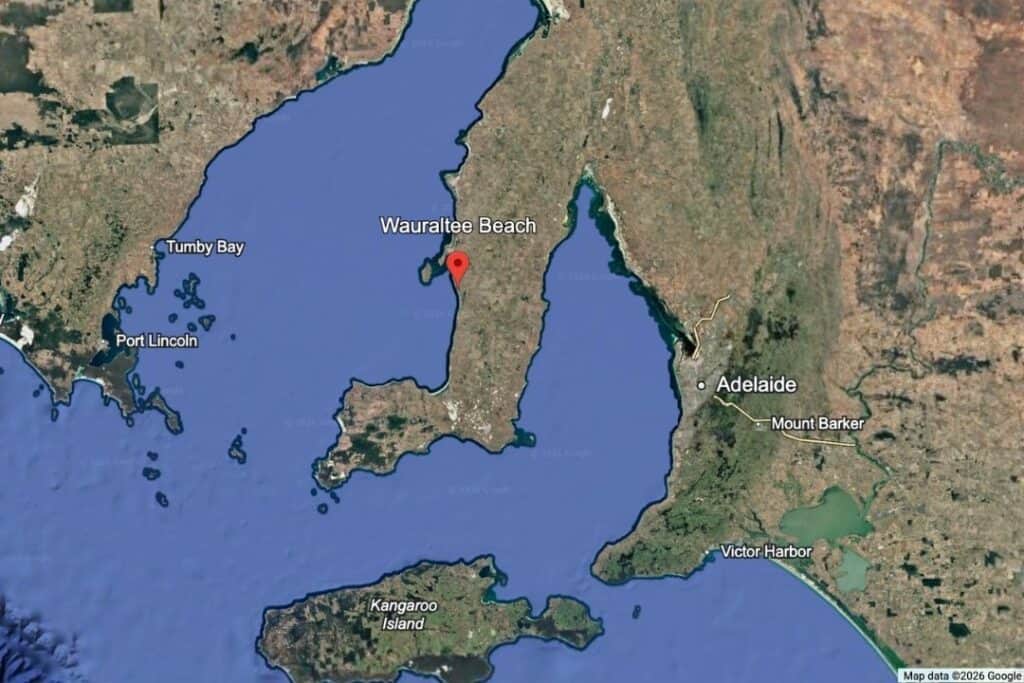
Wauraltee Beach sits on the western side of the Yorke Peninsula in South Australia, facing Spencer Gulf. It’s roughly a 2.5-hour drive from Adelaide and about 25 minutes from Minlaton, which is your nearest town for fuel, groceries and a dump point.
Being west-facing matters more than it sounds. It means calm, shallow water most mornings, and the sunsets here are probably the main reason Wauraltee Beach has its reputation.
How to get to Wauraltee Beach?
This is the most important practical thing on the entire page… Do NOT follow Google Maps!
If you type in “Wauraltee Beach”, there’s a good chance it’ll route you down a narrow, rough, sandy track for more than 5 kilometres. Unless you’re keen on scratches down both sides of the car, avoid it.
Instead, take Wauraltee Beach Road. It’s the official, maintained access route to the campground. It’s fine in a 2WD, and when towing a caravan or camper trailer. You’ll see signage for the bush campground just before the old beach access point.
We’d suggest dropping a pin on the campground entrance before you go.
Can you still camp on Wauraltee Beach?
No. And this is the main question we get.
Overnight camping directly on the sand at Wauraltee Beach stopped in February 2025. The restrictions came from the South Australian Government, supported by the Northern and Yorke Landscape Board and a fair bit of local backing. Second Beach was included in the same decision.
Larger vehicles such as caravans and motorhomes are no longer permitted on the beach either.
What’s still allowed?
Day access to the beach, including driving for boat launching and recreation. Fishing, swimming, walking, launching the boat, spending the day there – all still fine.
What isn’t: sleeping on the sand.
We won’t pretend we weren’t disappointed. We camped right on the beach here in 2022, and it was pure magic. But we’ve been back since, and the case for the change is easy enough to see once you’re standing there. Reports of 700-odd caravans on the sand over a holiday period, erosion through the dunes, rubbish, and people going to the toilet in the vegetation. Something had to give.
The good news is that the campground behind the dunes is genuinely good, and once the sun’s down, it’s pitch black anyway, and it’ll make far less difference than you’d think.

What the permit costs and how to book
Wauraltee is on e of the 19 bush campgrounds run by the Yorke Peninsula Council, and they all work the same way.
|
What |
Cost |
|---|---|
|
Single night |
$20 per vehicle |
|
Single night, YP Council Ratepayers |
$10 (valid assessment number required) |
|
Monthly (30 nights) |
$300 – phone the Council on (08) 8832 0000 |
|
Annual |
Yorke Peninsula Council ratepayers only |
|
Booking fee |
Applies to all online bookings |
|
Camping without a permit |
$315.50 fine |
Worth knowing:
→ Book online through Visit Yorke Peninsula, or phone 1800 202 445.
➤ If you’re planning a camping trip, make sure you read our complete guide to Camping in Yorke Peninsula for an overview of the best campgrounds on the peninsula.
What the bush campground is actually like
There are no designated campsites, so it’s first in, best dressed. What there is, is four distinct areas, and which one you end up in makes a real difference to your stay here. It’ll all depend on availability, of course, but here’s how we’d rank them:
Area 4: Our Favourite
Our favourite! Just before the beach access track, you’ll see a soft sand track to the left. Follow it carefully (this one is 4WD only), and you’ll find four or five more private spots nestled right behind the dunes. It’s quiet, close to the beach, and perfect if you’re looking for a bit of privacy.
Area 3: Best views
Right up the top, just before you’d normally drive onto the beach. This is where the front-row ocean views are. They’re limited and pretty popular, so if you’re aiming for one of these, try coming midweek or in the off-season. Turning up at 4 pm on a Saturday in January and expecting this one to be available- that’s pretty optimistic.
Area 1: The easy one
Immediately on your left as you come in. A big, flat, open space that suits tents, sways, campervans, and caravans. And it’s the closest to the drop toilet.
This is where you’ll most likely find a spot when everything else has been taken. We stayed here ourselves. It wasn’t our favourite spot, but it was quiet, and we had a good night’s sleep.
Tip: Don’t leave your shoes outside! We had an overnight visitor who decided to make off with one of Wim’s thongs.
Area 2: The backup
A bit further on the right-hand side. Slightly narrower than area 1, but still grassy and pretty spacious.


Facilities: What’s here and what isn’t
The facilities here are basic. There’s one drop toilet, and that’s about it.
There’s no water, no bins, no power and no showers.
Come self-contained. The council designed the bush camping here around self-containing setups and you’ll have a much better time if yours is one.
What to bring:
- Bring your own toilet paper (trust me on this one). None is provided at any of the council campgrounds.
- Carry plenty of water. The nearest supplies are available at Minlaton, about 25 minutes away.
- Bring bin bags and take all your rubbish with you
The nearest dump point is also at Minlaton.
Are dogs allowed at Wauraltee Beach Bush Campground?
Yes. Dogs are welcome at Wauraltee Beach and at every one of the council’s bush campgrounds. Just keep them under control and pick up after them. It’s a great spot for a dog, with a long open beach and space to run.
If you’re travelling with a dog, the council bush camps are your go-to.
➤ For more information on camping, check out our complete guide to Camping in Yorke Peninsula.
Things to do at Wauraltee Beach
Despite the camping changes, everything that made this place worth the drive is still here.
Fishing
This is why many people come to Wauraltee. You can fish off the beach, from a kayak or launch your boat. Wauraltee has a reputation for decent catches. The gulf side is sheltered enough that you get plenty of days when getting out in a small boat is comfortable. Boat launching from the beach is still permitted; it was specifically preserved when the camping restrictions came in.
Swimming
On a calm day, it’s lovely! The water is shallow and clear, and it stays that way a long way out. It isn’t patrolled, there are no flags and no one is watching, so stick to the shallows and use your own judgement.
Beach walks
The shoreline goes on and on. Walk it, run it, look for shells, or throw a towel out and stay put. Low tide opens up a lot more sand, and it’s the best time to go for a long walk or run.
Sunsets
The Yorke Peninsula west-facing beaches are famous for a reason. And Wauraltee is no exception. Grab a drink, walk over the dune in the evening, and prepare for one of the best sunset shows in South Australia. It’s the single best hour of the day here, and we’ve never once been disappointed.


The seaweed
We’ll be honest. Wauraltee gets seaweed. Some visits you’ll find clean white sand from one end to the other; others, there’ll be a decent band of it along the tide line, particularly after heavy winds. It doesn’t spoil the place, and it clears, but if you’ve seen the photos and you turn up to a seaweed week, at least you’ll know it’s normal rather than thinking you’ve come to the wrong beach.
Can you drive on Wauraltee Beach?
Day access for vehicles remains. The beach is still used for launching boats and getting gear down the sand. What’s out is staying overnight and taking caravans or motorhomes onto the beach.
Because coastal vehicle access on the Yorke Peninsula is under active review, the Northern and Yorke Landscape Board is working through a 10-year Coast Access Strategy that proposes closing some tracks and formally keeping others open. The sensible thing is to read the signage at the access point when you arrive rather than relying on what you’ve read online, including this page.
And the usual, drop your tyre pressures before you go on, check the tides and don’t drive on the dunes..
Where to stay near Wauraltee Beach if the campground is full?
Wauraltee has a capacity limit, and it does fill over summer and school holidays. If you can’t get a spot:
➤ All the council options are listed in our full Yorke Peninsula Camping Guide.
Best time to visit Wauraltee Beach
Summer (December to February)
Warmest water, best swimming, but by far the busiest and windiest period. Book well ahead and don’t count on a front-row site.
Autumn (March to May)
Our favourite. Still warm enough to swim, the crowds have gone, and the wind has dropped a fair bit.
Winter (June to August)
Quiet, often windy, and you may well have the place to yourself. Bring warm gear and expect the beach to look wilder.
Spring (September to November)
Wildflowers through the scrub, mild days, water still cool. A good time to combine Wauraltee Beach with a larger Yorke Peninsula Road Trip before the summer crowd arrives.
Wauraltee Beach Map
We’ve mapped Wauraltee Beach and other campgrounds, nearest fuel, towns and dump points on this map. Including everything you can’t miss when visiting Innes National Park.

So, is Wauraltee Beach still worth it?
YES. Easily.
Things have changed, and we’ll always have a soft spot for the way it was. But the views, the quiet, the fishing and the sunsets are exactly what we were hoping for. You just sleep a few metres further back.
It’s probably for the best. The dunes are recovering, and there’s less traffic on the sand. For $20 per night, 25 minutes from a decent bakery and 2.5 hours from Adelaide, it’s still one of the best value beachfront camps in South Australia.
Wauraltee Beach FAQs
Can you camp on Wauraltee Beach?
Not on the sand. Overnight beach camping stopped in February 2025. You can camp at the Wauraltee Bush Campground behind the dunes for $20 per vehicle per night with a Yorke Peninsula Council permit.
Do you need a permit to camp at Wauraltee Beach?
Yes. A Yorke Peninsula Council bush camping permit is required, at $20 per vehicle per night, booked online in advance. Camping without one can end up in a $315.50 fine.
Is Wauraltee Beach Free Camping?
Day access for vehicles is still permitted, including for launching boats. Overnight stays on the beach and access for caravans and motorhomes are not permitted. Check the signage at the access point.
How do you get to Wauraltee Beach?
Take Wauraltee Beach Road, which is easily accessible for 2WD and caravans. Do not follow Google Maps, which routes some vehicles down a rough 5-kilometre sand track.
More Yorke Peninsula travel guides
If you’re heading this direction, start with our complete Yorke Peninsula Road Trip guide with a 5-day itinerary. For more detailed guides, check out:
The content on Bush and Bay is based on our personal experiences and opinions. While we strive to provide accurate, up-to-date information, travel conditions and recommendations may change over time. We do not take responsibility for any decisions or actions made based on our content. Always conduct your own research and consult with professionals where necessary. Bush and Bay may earn a small commission from affiliate links, but this does not influence our reviews or recommendations. We only endorse products and places we have personally tested and believe in.
