
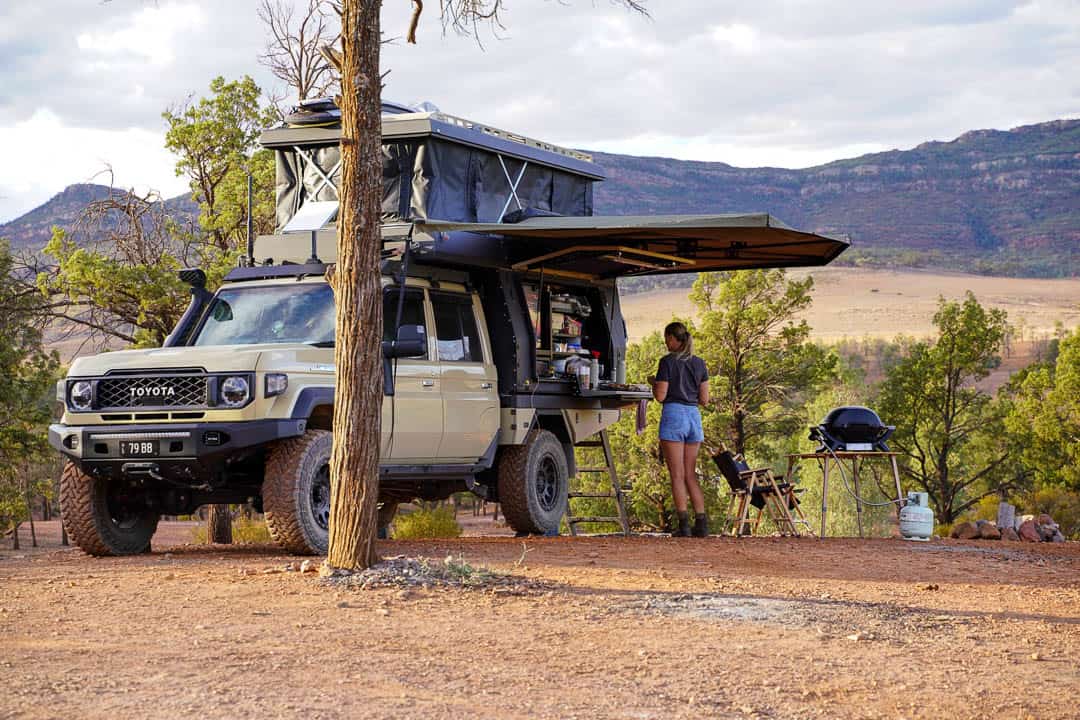
Camping in Flinders Ranges: All 10 campgrounds, free camps & Map

Last updated: October 2026
We went camping in Flinders Ranges twice and have been through almost every campground in the national park. This guide compares all the national park camps, free camps and station stays where we’d go back in a heartbeat, what it costs, and what’s open right now.
Flinders Ranges Road Conditions (updated 5 October 2026)
The February 2026 floods did more than $10 million of damage to roads across the Flinders Ranges Council area. The good news: the gorge roads have reopened. The catch: they’re only 4WD now, and none of them will take a caravan or trailer.
Here’s where things stand as at 5 October 2026:
|
Road |
Status |
|---|---|
|
Bunyeroo Valley Road |
OPEN – High-clearance 4WD only, no towing. Bunyeroo Gorge itself is still closed pending repairs, so you can reach Razorback Lookout and the campgrounds but not drive the gorge. |
|
Brachina Gorge Road |
OPEN – High-clearance 4WD only, under 3 tonnes, no towing. Sections of road are still missing. Follow the wheel tracks through the creek beds and take it slowly at the scours. |
|
Moralana Scenic Drive |
OPEN – High-clearance 4WD only, no towing. Single lane at one causeway where a tree has come down. |
|
Glass Gorge Road |
OPEN to 4WD. You can tow between Parachilna Gorge Road and Moolooloo Station, but not between Moolooloo and Blinman. Bog holes near the Blinman end. |
|
Parachilna Gorge Road |
OPEN – High-clearance recommended, water still over some creek crossings, slow down. |
|
Flinders Ranges Way (sealed) |
OPEN |
|
Skytrek |
OPEN |
|
Caernarvon Track |
OPEN |
|
Arkapena Track |
OPEN – But Rawnsley closes it after rain. Ring (08) 8648 0700 first |
One more date for the diary: most of the national park is closed from 9 pm Friday 6 November to 9 pm Monday 9 November 2026 for a pest control program. A few areas stay open. Check the park alerts before you book that weekend.
Check these two before you leave home; they’re updated every few days:
There is something magical about camping in Flinders Ranges, South Australia. The rugged outback terrain, mind-blowing views, the red dirt under your feet, and those cracking sunsets that turn everything golden. Evenings spent around a crackling campfire with a beer or wine, gazing up at a sky full of stars. It’s easy to understand why Flinders Ranges is rated one of the best camping destinations in Australia.
This was our second time camping in Flinders Ranges, and I reckon we’ve just about nailed which campgrounds are worth your time. We stayed at a few different spots over the years. Some free, some in the National Park, and even on a private station. Now, we’re here to help you find the best spot for your own trip.
In this complete guide to camping in Flinders Ranges, we’ll cover free camps, national park campgrounds, station stays, practical tips, and everything you need to plan a proper outback adventure.
➤ If you’re planning a trip to the Flinders Ranges, start with our 3-Day Flinders Ranges Itinerary.
Camping in Flinders Ranges summary
|
National Park Campgrounds |
10 – from $27.50 per night (walk-in camps from $12.30 |
|---|---|
|
Free Camping |
Yes – Along RM Williams Way south of Hawker and through Prachilna Gorge |
|
Station Stays |
From around $35 per night |
|
Bookings |
A must for national park sites, online only |
|
Facilities |
Long drop toilets and fire pits at the national parks. Water tanks at most, but don’t rely on them. Flushing toilets and hot showers at Rawnsley Park Station and Wilpena Pound. |
|
Power |
Not in the national park |
|
Campfires |
Allowed outside the fire danger season. Bring your own firewood. |
|
Caravans |
Caravan-friendly on-site, but at the moment the roads in are 4WD only and closed to towing, so check before you book. Usually caravan-friendly at Trezona, Aroona, Cambrian, Koolamon, Teamsters, Dingley Dell and Youngoona. |
|
Dogs |
Not permitted in the national park. |
|
Best time |
April to October. Nights drop below 5 degrees from May to August. |
|
Reception |
Patchy |
Free camping in Flinders Ranges
Cost: Free
If you’re travelling on a budget or just love free camping, there are a few great free camps at the southern end of the Flinders. We used one as a stopover after we left the national park on our way to Peterborough, and it was spot on.
Free camping is a great option if you’re self-contained and comfortable without facilities.
We pulled up at a free camp along RM Williams Way, just south of Hawker. There are quite a few spots to choose from; most of them are flat and easy to access. There are no facilities, but you can enjoy a campfire and have a quiet night under the stars.
Where to Free Camp in Flinders Ranges
Here are the free camps worth knowing about, north to south:
Parachilna Gorge
Location-wise, our favourite. There are at least a dozen separate pull-offs along the road between Parachilna and Blinman, most of them big, flat and beside the creek. Some are 2WD accessible, some need clearance. No facilities at all, and there are donation boxes at a few. Worth putting something in. Open at the time of writing, though there’s water across some crossings.
Nooltana Creek Rest Area
13 km north of Hawker on the Outback Highway. Free, no facilities, flat spots near the dry creek bed. it’s tight for a big van but fine for a camper or a rooftop tent.
Cradock Hotel
20 minutes south of Hawker on RM Williams Way. Not strictly free; the deal is you buy a beer at the pub. But there are toilets, $2 hot showers and plenty of space. Dogs are welcome.
RM Williams Way south of Hawker
Yanyarrie Creek and Pekina Creek near Carriton are both good, flat, and take caravans. Great for a quick overnighter.
Chambers Gorge
For the 4WD crowd. About 70 km east of Blinman, four main camping areas, no facilities and a rough road in. It’s on private land, so read the signs at the gate. Things can change.
How to keep free camping allowed in Flinders Ranges
A few rules that keep these spots open:
- Take everything out with you. There are often no bins
- Don’t leave toilet paper lying about; it takes years to break down.
- Check the fire restrictions before you light a campfire.
- If there’s a donation box, use it.
Free camps come and go, and a few of these will change. WikiCamps is still worth keeping on your phone for what’s opened up since then. Just make sure you have it in offline mode before you lose reception.
If you’re planning multiple nights of camping in Flinders Ranges, we’d recommend mixing free camping with a national park stay for the full experience.
➤ If you are planning your trip to Flinders Ranges, check out our 3-Day Flinders Ranges Itinerary for more detailed information on how to plan your days.
National Park Camping in Flinders Ranges
Camping in Ikara Flinders Ranges National Park
Cost: from $27.50 per night
Camping inside the national park is next level. You’re right in the middle of incredible scenery, surrounded by mountains and wildlife.
For many travellers, camping in Flinders Ranges really means staying inside Ikara-Flinders Ranges National Park. This is where you’ll find the most iconic landscapes.
Two ‘need to knows’ before you go:
- Your campsite booking is separate from your vehicle entry pass. Booking a campsite does not include park entry.
- There’s no reception in the park, and no gate to pay at. Book both online and download confirmations before you leave Hawker.
There are ten campgrounds in the National Park, only one of which is a walk-in, and we’ve seen all of them. We either stayed there or drove through. They all offer something different, but our top pick is Cambrian Campground.
All 10 campgrounds in Ikara-Flinders Ranges National Park
*About caravans: Caravan-friendly campground, BUT at the moment the roads in are 4WD-only and closed to towing. Check before you book.
|
Campground |
Sites |
Road |
Caravans?* |
Facilities |
Best for |
|---|---|---|---|---|---|
|
Cambrian |
13 |
Bunyeroo |
Yes |
Long-drop, fire pits |
Our pick. Quiet, well-spaced, and close to Razorback lookout |
|
Acraman |
4 |
Bunyeroo |
No |
Long-drop, BBQ |
Sunset at Razorback Lookout and a short drive back |
|
Koolamon |
13 |
Bunyeroo / Aroona Creek |
Yes (some sites 4WD) |
Long-drop, BBQ plates, shared fire pits |
Heysen-country views, very little shade |
|
Youngoona |
4 |
Brachina (east end) |
Yes |
None |
Smallest and quietest. Site 4 is the one. |
|
Trezona |
15 |
Brachina Gorge Road |
Yes |
Long-drop, picnic area, BBQ |
Caravans, and the Ediacaran Golden Spike is a short walk. |
|
Brachina East |
13 |
Brachina Gorge Road |
Selected sites |
Long-drop, fire pits, BBQ |
Creek-side sites. Some are 4WD-only |
|
Teamsters |
6 |
Brachina Creek clifftops |
Yes, and buses |
Long-drop, shared fire pits, BBQ plates |
Fossil worm burrows nearby. Limited shade. |
|
Dingley Dell |
7 |
Oraparinna Creek |
Yes |
Long-drop, shared fire-pits |
Adnyamathanha rock carvings at Perawurtina nearby. |
|
Aroona |
13 |
Northern end of the park |
Yes |
Long-drop, bus parking |
Loop walks and the Heysen Trail |
|
Wilcolo |
Up to 50 walkers |
Walk-in only |
No |
Long-drop, rainwater tank |
Heysen and Mawson Trail hikers. No campfires ever. |
→ All ten are unpowered and cost $27.50 per night (except Wilcolo at $12.30 for walkers and cyclists). Most have a rainwater tank at the toilet block, but National Parks won’t guarantee quality or the supply. Carry enough water.
Cambrian Campground
Here’s why Cambrian is our top pick: Location. Cambrian Campground is located on the scenic Bunyeroo Road, near the iconic Razorback Lookout. A must-visit spot, especially before sunset or at sunrise.
It’s also tucked away amongst native pines and gums, making it feel secluded. All 13 spaces are well spaced out, and each one has its own firepit.
➤ If you’re into 4WD touring, this area is also home to some of the most scenic drives in the region. We created a guide with our our guide to the best 4WD tracks and scenic drives, which pairs perfectly with camping in the Flinders Ranges.

➤ If you want to structure your trip properly, we recommend combining this campground with our 3-Day Flinders Ranges itinerary, so you don’t miss the highlights while camping in Flinders Ranges.
Other campgrounds worth a look
Here are a few others that might suit, depending on what you’re after:


Acraman Campground
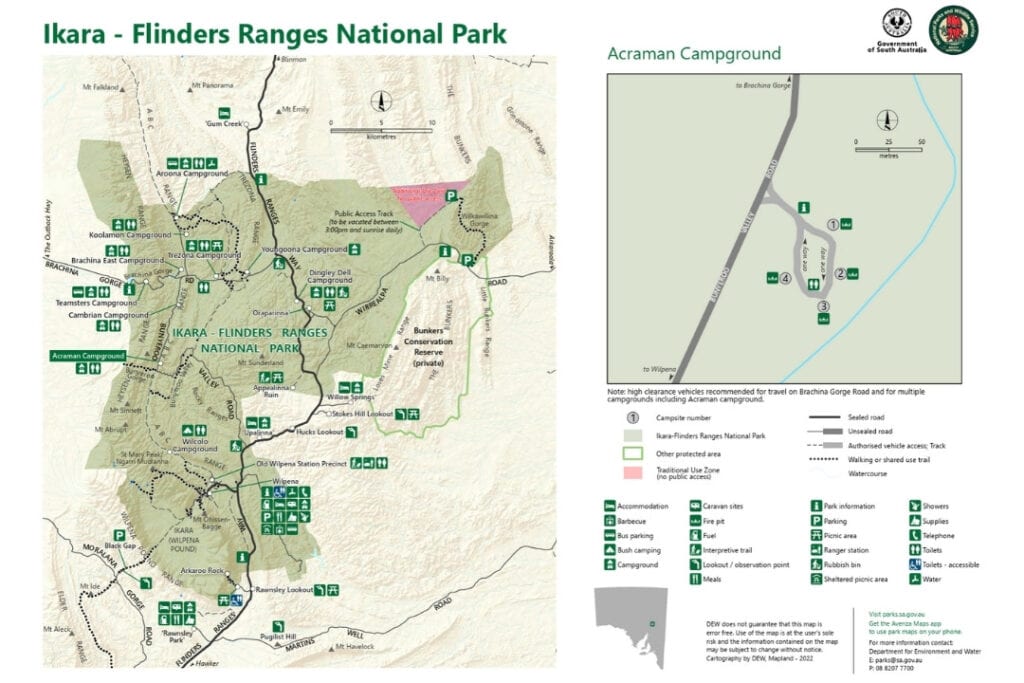
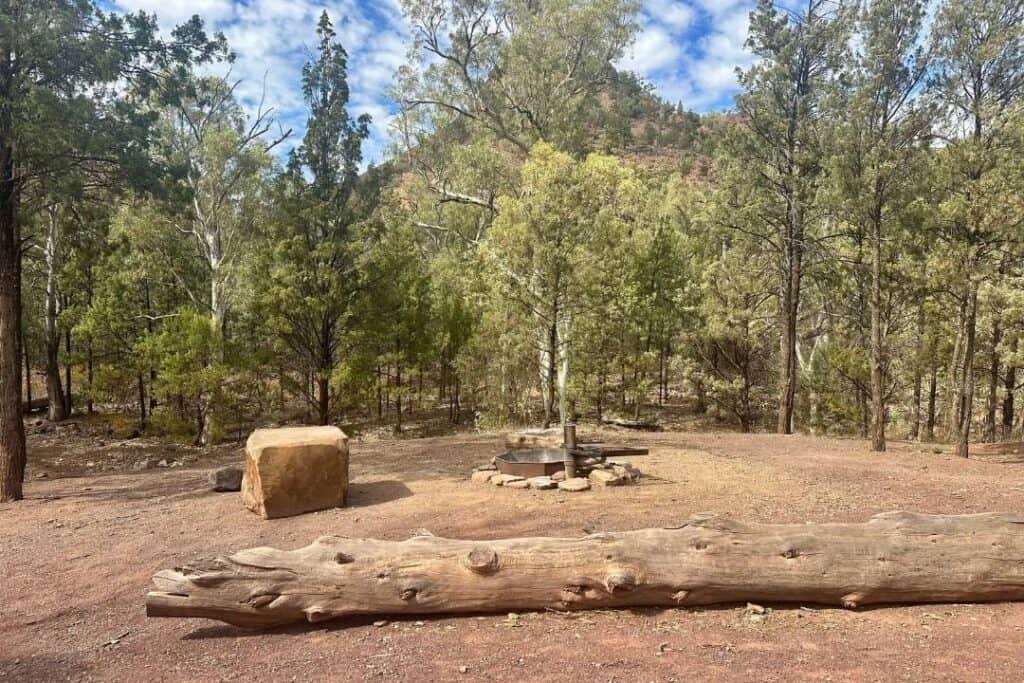
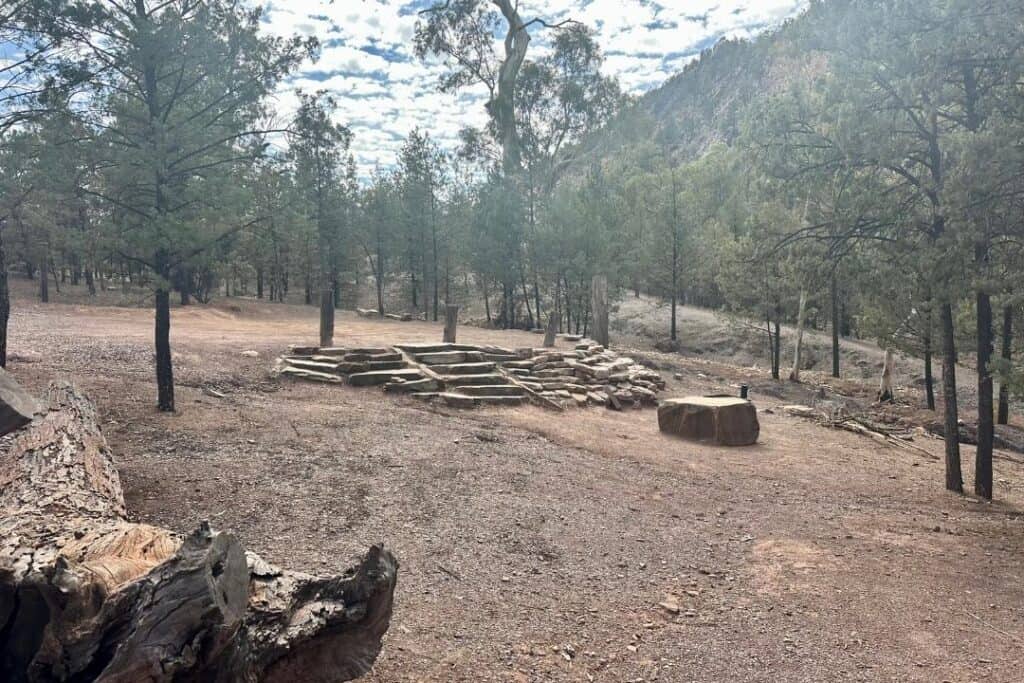
If you’re after a quiet base close to an epic lookout, Acraman is a great little spot. Just off Bunyeroo Road, closest to Razorback Lookout and not far from Cambrian Campground. It’s a small campground with only 4 sites and a long-drop toilet. It’s nice and peaceful, each campsite comes with a fire pit and beautiful scenery.
It’s a top choice if you want to watch the sunset at Razorback and head back to camp quickly. Booking ahead is recommended; these spots fill up quickly. It’s tent and camper trailers only, don’t bring a caravan.


Trezona Campground
Located on the Brachina Gorge Track, on the western side of the park. When we were visiting (during Easter Holidays), there were two volunteers who would answer any questions you have. It’s a great spot for caravans, and when driving through the entire campsite, nr. 15 is the most secluded one of all.
It’s also the closest campground to the Ediacaran Golden Spike, a small brass marker in the rock that defines the start of a whole geological period. It’s the only one in Australia and the first new period declared in 120 years, which is a lot more interesting than it sounds standing in front of it.
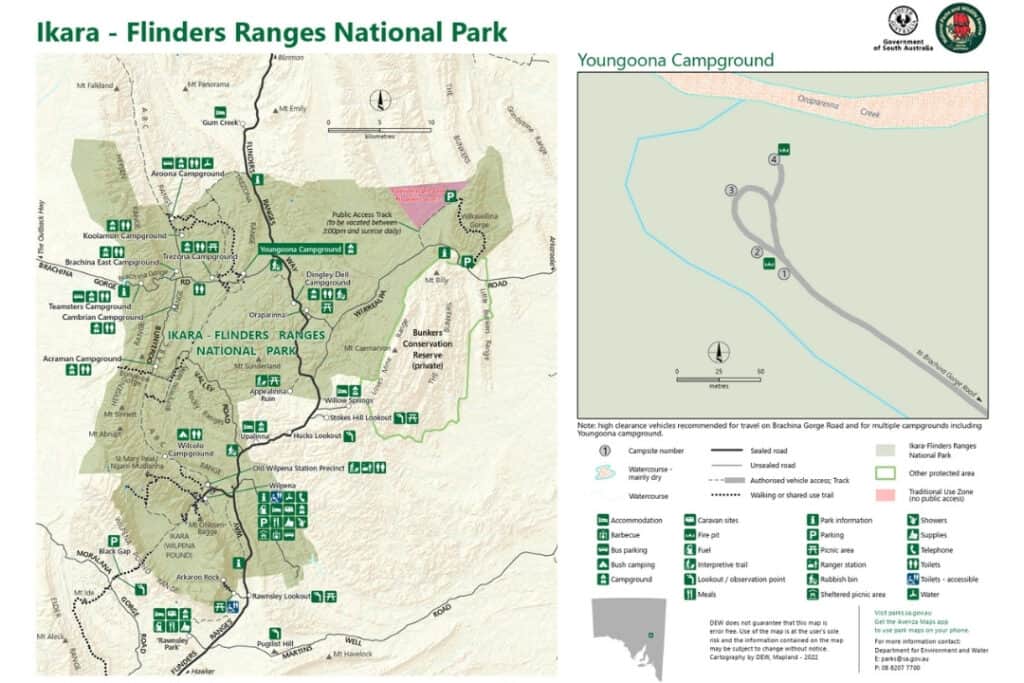
Youngoona Campground
A bit tucked away and usually less busy than other spots. A beautiful bush camp, and especially if you can score site 4. Hands down the best spot. There are only four sites and no facilities at all, not even a toilet. So you need to be self-contained.
Most of these campgrounds allow campfires (when restrictions aren’t in place). You’ll need to book a camping permit and national parks vehicle access permit online. There’s no reception here, so make sure you plan ahead and print out or download your permits.
Station Stays in Flinders Ranges
Rawnsley Park Station – Our Favourite
Cost: From $35 a night
If you’re chasing a little more comfort, or you want to enjoy a hot shower after a few nights in the bush, there are a few station stays around the Flinders. Station Stays are a great middle ground. You still get the outback feel, but with a few extra comforts. We stayed at Wilpena Pound Resort, which wasn’t really our vibe, but we’ve now found our favourite stay outside the park: Rawnsley Park Station.
Their bush campground blew us away. The unpowered and undesignated sites are away from the busy main area, and it goes for 4 kilometres. You’ll get a proper wilderness feel, with Wilpena Pound right in the background.
If you’re new to camping in Flinders Ranges, this is a great starting point before heading deeper into the national park.
Their location is perfect. Just outside the National Park boundary, near Wilpena. Close to the free Moralana Scenic Drive, Arkaroo Rock hike, and half an hour from the town Hawker.


Prices and facilities
|
Unpowered bush site |
From $35 per night for two, $12 extra per adult |
|---|---|
|
Powered site |
From $51 per night for two, $15 per extra adult |
|
Park cabins |
From $140 per night – sleeps 4 |
|
Pet-friendly cabins |
Two available – $20 per pet per night |
|
Dog minding |
$50 per dog, 8 am to 6 pm |
|
On site |
Licensed shop, fuel, camp kitchen, pool, amenities block, Woolshed Restaurant |
The bush camps are unpowered. There are small blocks with two flushing toilets every 100 metres. The showers and camp kitchen are in the main area.
Highlight
The view. This is no joke, the sunset over Wilpena pound from your campsite is unreal.
Bookings
Book in advance, especially during weekends and school holidays.
This is a great mix of bush camping with a few comforts not too far away. The station also runs scenic flights, the Arkapena 4WD track and other tours if you want to learn more about the area.
Other Station Stays worth knowing
Willow Springs Station
Camping from $40 for two, plus shearer’s quarters and cottages. Home of the Skytrek 4WD track, and the track is $15 cheaper if you’re staying overnight.
Merna Mora Station
On the western side near the Moralana turn-off. Camping, cabins and plenty of space.
Arkaba
The other end of the scale entirely. Luxury homestead stays and guided walks, and the station country that the Moralana Scenic Drive crosses.
Not camping? Where else to stay in the Flinders Ranges
Camping isn’t for everyone, and sometimes a real bed and hot shower after a day in the dust can feel like everything you need. Here are your options:
Wilpena Pound Resort
The only accommodation inside the national park. Powered and unpowered sites, safari tents, motel rooms, plus the only fuel and general store in the park. We camped here, and it wasn’t our vibe. It’s busy and feels more like a resort than the Flinders. But the location is pretty good.
Hawker
The nearest town, 55 km south of Wilpena. Caravan park, motel, pub, servo and a general store. Great if you want power and reception and don’t mind driving in each day.
Rawnsley Park Station
Cabins from $140 and eco villas if you’re treating yourself.
Blinman and Parachilna
The North Blinman Hotel offers hotel and motel rooms, as well as a caravan park. The Prairie Hotel at Parachilna has proper rooms and one of the best restaurants in outback South Australia.
Glamping
You’ll see it advertised, and Ikara Safari Camp at Wilpena is the main one. Book well ahead.

Flinders Ranges Camping Map
Every campground in this guide is pinned. All national park sites, the free camps, the station stays, plus fuel and highlights. Save it to your phone before you leave Hawker.

Tips for camping in Flinders Ranges
Here are a few things that we learned that will help you out:
Stock up before you come here. Make sure you have done your grocery shopping and fuelled up when you leave home, or when driving through a bigger city. There is a general store and some petrol stations in Hawker, but the prices are ridiculous. Port Augusta is your last proper supermarket.
- No reception: there is no reception! Download maps and save your booking info when you still have coverage.
- Take your rubbish with you: Most places don’t have bins, so bring garbage bags and leave no trace
- Respect the country: this is Adnyamathanha land, with a deep cultural history.
- Weather: It gets hot during the day and freezing at night, even in spring and autumn. Pack layers and be ready for all weather. July averages 16°C by day and under 4°C overnight at Hawker, and it gets colder than that in the national park.
- Check fire bans: fire rules change depending on the season. Check the CFS website or park alerts before your trip.
- Bring your own firewood: you can’t collect inside the national park, and there’s nowhere to buy it once you’re past Hawker.
- Water: carry more than you think you need, allow at least 5 litres per person per day.
- Book everything before you go. National Park sites are online-only and sell out over school holidays and long weekends. You can’t book on arrival, because there’s no reception.
- Carry a Survival First Aid Kit. You’re a long way from any help, so make sure you carry a proper first-aid kit. Readers get 10% off on selected collections when using the code BUSHANDBAY at checkout.
Should you, or shouldn’t you go camping in Flinders Ranges?
If you’ve been thinking about it, do it. Camping in Flinders Ranges is one of those proper Aussie adventures that sticks with you forever. The colours, the stillness, the wildlife, the scenic drives, etc. A camping trip doesn’t get much better.
Whether you go full bush with free camping, find a spot in the national park, or treat yourself to a more comfortable stay, there’s no wrong way to do it.

I hope this full guide to going camping in Flinders Ranges makes planning your trip a little easier and inspires you to get out there and experience it for yourself. If you have any questions or want to know more about the spots we stayed at, feel free to reach out! Happy Camping!
FAQs About Camping in Flinders Ranges
To help you plan camping in Flinders Ranges properly, here are some of the most common questions we get:
Is camping in Flinders Ranges suitable for caravans?
Currently not. At the moment, the roads in are 4WD-only and closed to towing. Check before you book.
Do you need a 4WD for camping in Flinders Ranges?
At the moment, Bunyeroo and Brachina Gorge Roads are high-clearance 4WD only and closed to towing, so you can’t get a caravan into any of the park campgrounds until repairs are finished.
When is the best time to go camping in Flinders Ranges?
Autumn and spring are ideal. Summer can be extremely hot, and winter brings cold nights but beautiful, clear days. From our experience, between April and October are the best months. Days around 21 and 26°C, and nights that aren’t freezing.
How many days do you need for camping in Flinders Ranges?
We recommend at least three days to see the highlights. If you want to explore more scenic drives, 4WD tracks and hikes, five days would be better. Our 3-Day Flinders Ranges Itinerary maps out exactly how we’d spend them.
How much does camping in Flinders Ranges cost?
National Park campsites are $27.50 per night ($12.30 for the Wilcolo Walk-in) plus $14.40 per vehicle for park entry. Rawnsley Park unpowered sites start at $35 for two. The free camps south of Hawker and through Parachilna Gorge cost nothing.
Is there free camping in Flinders Ranges?
Yes. There are free camps along RM Williams Way south of Hawker, at Nooltana Creek 13 km north of Hawker, and at Parachilna Gorge. No facilities at any of them, so you need to be fully self-contained.
Which is the best campground in the Flinders Ranges?
For us, Cambrian Campground. Thirteen well-spaced sites, its own fire pit at each one, native pines for shade and Razorback Lookout a short drive away for sunset. Acraman is the pick if you want something smaller, and Trezona when you’re towing.
Can you have a campfire when camping in Flinders Ranges?
Yes, outside the fire danger season, at every park campground except Wilcolo. Bring your own firewood, collecting in the park isn’t allowed. Check the CFS site for restrictions before you go.
More Flinders Ranges Guides
You can find more inspiration for your Flinders Ranges trip in our travel guides:
The content on Bush and Bay is based on our personal experiences and opinions. While we strive to provide accurate, up-to-date information, travel conditions and recommendations may change over time. We do not take responsibility for any decisions or actions made based on our content. Always conduct your own research and consult with professionals where necessary. Bush and Bay may earn a small commission from affiliate links, but this does not influence our reviews or recommendations. We only endorse products and places we have personally tested and believe in.
