
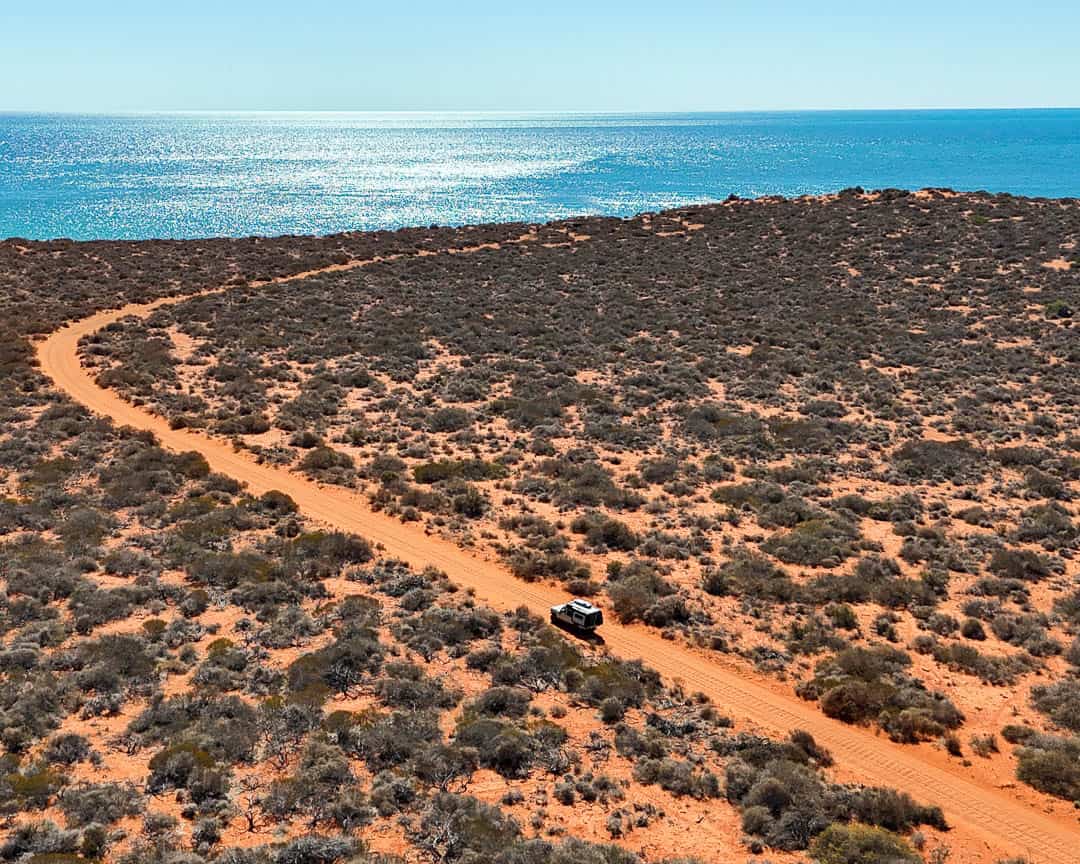
Francois Peron National Park 4WD Guide: Track conditions, tips & what to expect

If you’re planning a trip to Francois Peron on the Coral Coast in Western Australia, I’m sure you’ve heard some stories about the Francois Peron National Park 4WD track.
This isn’t your average national park drive. The 4WD tracks in Francois Peron are sandy and bumpy, and can catch you out if you’re not prepared. But here’s the good news. You don’t need to be an expert to drive through Francois Peron National Park 4WD tracks. You just need to understand what you’re getting into.
We spent 3 days exploring the park in our LandCruiser 79 series and a Tommy Camper on the back. Taking just over 4 tonnes on these tracks, and we’re proud to say that we didn’t get bogged once. We’re not the most experienced 4WDers either, so trust us when we say: if we can do it, you can too.
That said, we did help a few people dig their way out, which inspired us to put together this easy guide so you can avoid the shovel work and focus on the fun part, fully enjoying what Francois Peron has to offer.
➤ If you’re heading this way, make sure you read our Francois Peron National Park guide to plan your trip.
Do you need a 4WD for Francois Peron?
Yes. A high-clearance 4WD is essential.
There’s no way to explore Francois Peron National Park 4WD tracks in a 2WD or AWD vehicle. The sand is simply too soft, and conditions change constantly. To safely drive through Francois Peron National Park 4WD tracks you’ll need:
- High clearance
- Low tyre pressure
- Recovery gear (Maxtrax, shovel, snatch strap, winch)
- Confidence driving in the sand
➤ If you’re unsure whether this trip is for you, head back to our Francois Peron National Park Guide.
Fuel
You’ll be surprised, and probably not very pleased, with your fuel consumption when tackling the Francois Peron National Park 4WD tracks. Soft sand driving adds up quickly, especially if you’re carrying weight.
The last fuel station is in Denham, only 10 kilometres from the park entrance. Make sure you fuel up when you’re passing this town.

What to expect from Francois Peron National Park 4WD tracks
The first thing you’ll notice once you drive into the National Park is how quickly everything changes. You leave Denham, pass through the Peron Heritage Precinct, drop your tyre pressure, head to Big Lagoon, but then… the red dirt turns into soft sand, the track narrows, and suddenly you’re in full focus.
Entry to Big Lagoon
From the Peron Heritage Precinct at the park entrance, the track to Big Lagoon is the most manageable part of the drive. It’s mostly compact sand, with only a few soft patches, mostly in the corners. If you’re travelling with an off-road caravan or camper trailer, this is as far as you can go
Big Lagoon to Cape Peron
This is where it gets real. The track north from Big Lagoon to Cape Peron is long, with narrow parts, soft, bumpy, and very corrugated in places. It’s not suitable for towing anything. This is where we saw most people get stuck. Drop your tyre pressure, stay in 4×4 high, and keep momentum.
It’ll take around 1,5 to 2 hours one way to reach Cape Peron, so leave enough time to get back or plan to camp overnight at one of the northern sites like Gregories or Bottle Bay.
Herald Bight
If you’re heading towards Herald Bight, the eastern side of the park, you might want to buckle up again. The last bit of this track is again very soft and bumpy right before you access the beach. Be cautious before you drive onto the beach. Test the sand and walk it first. We saw people bogged to the chassis here.

Tyre Pressure
This is where you can make a big difference. We dropped to 15 psi in the front and 20 psi in the back because of all that weight, and didn’t have any dramas. We’d recommend deflating to 17 psi in the back if you’re not carrying that much weight, like we are. You can deflate your tyres at the air station at the Peron Heritage Precinct; there’s a compressor there too, so you can inflate your tyres again after your adventure.
Driving tips for Francois Peron National park 4WD
These simple tips will make your experience much more enjoyable:
- Engage 4WD high before you hit the sand.
- Momentum is key. Don’t go too fast, but keep momentum going when you’re in soft sections.
- Avoid sharp turns in soft sand.
- Stay in existing tracks. Don’t go off-track and avoid damaging vegetation. The main track is already sketchy enough.
- Don’t overcorrect if the vehicle moves
Driving through Francois Peron National Park 4WD tracks isn’t about speed; it’s about keeping momentum.
What to do when you get stuck?
It happens, even to experienced drivers. And let’s be real, it’s all part of the adventure. If you find yourself stuck, here’s what to do:
- Ease off the accelerator. Spinning tyres will only dig you deeper.
- Try reversing out gently.
- If that fails, grab the shovel and start clearing sand from around all four tyres.
- Use recovery tracks (like Maxtrax) to get traction.
- Still stuck? Then it’s time to get the snatch strap or winch out, ideally with help from another vehicle.
TIP: Always carry a UHF radio and let someone know your plans before taking off. Channel 10 is often used by national parks.
What to bring for your francois Peron National Park 4WD adventure?
Your last stop before you’re heading into the National Park is Denham. Here you’ll find fuel and a little supermarket where you find everything you need for your Francois Peron adventure.
Water
Bring plenty of drinking water, there’s no drinking water inside the national park.
Food
You won’t find shops or supplies inside the park. Bring everything you need.
Recovery gear
- Maxtrax
- Shovel
- Air compressor (optional)
- Tyre deflator
- UHF radio
- Snatch strap/winch
Camping gear
- Shade – it can get very hot
- Insect repellent – the flies at Bottle Bay were wild when we visited in May 2025
- Rubbish Bags – there are no bins, so take everything with you and leave no trace
First Aid Kit
Don’t forget, you’re heading into a remote area, and medical help can be hours away. Get yourself a good-quality kit that includes items like compression bandages, antiseptics, and supplies for cuts, bites, and burns. We also carry a snakebite kit from Survival, just in case. You probably won’t need it, but it’s just one of those things you’d rather have and not use than the other way around. You can use our discount code BUSHANDBAY to get 10% off.
insurance
Getting recovered from a remote national park isn’t cheap. Not all insurers cover remote or off-road recovery, so it’s worth checking. We’re with Club 4X4 insurance, and it’s reassuring knowing we’re covered when we venture off the beaten path

Our experience driving francois peron national park 4WD tracks
We explore Francois Peron with a fully loaded LandCruiser 79 series and Tommy Camper, weighing just over 4 tonnes with zero issues. We made sure we dropped our tyre pressures, stayed in 4WD and kept steady momentum. We didn’t get stuck ourselves, but we helped a few others.
Best time to drive
Track conditions will change throughout the day. We believe the best time to tackle Francois Peron National Park 4WD tracks is either early morning or late afternoon, so you avoid the midday heat (meaning softer sand)
Plan your Francois Peron National Park 4WD Trip
If you want to plan your trip properly, start with these guides:
- Francois Peron National Park Guide
- Francois Peron National Park Camping Guide
- 3-Day Francois Peron National Park Itinerary
➤ Or explore all our Western Australia Travel Guides to help plan your trip.
FAQs
Are the Francois National Park 4WD tracks difficult?
Driving the 4WD tracks in Francois Peron National Park is manageable with preparation, but conditions can be challenging due to soft sand.
What tyre pressure for Francois Peron national park 4WD tracks?
Most vehicles run between 15 and 18 PSI, depending on weight and conditions.
Can you tow in Francois Peron National Park?
You can tow to Big Lagoon, but beyond that, the tracks get too soft and bumpy, not suitable for towing.
The content on Bush and Bay is based on our personal experiences and opinions. While we strive to provide accurate, up-to-date information, travel conditions and recommendations may change over time. We do not take responsibility for any decisions or actions made based on our content. Always conduct your own research and consult with professionals where necessary. Bush and Bay may earn a small commission from affiliate links, but this does not influence our reviews or recommendations. We only endorse products and places we have personally tested and believe in.
Testimonials do not contain any financial product advice and are based on the individual’s circumstances. Issued by Club 4X4 Pty Ltd as an AR of Lifestyle Insurance Group who is acting (under its own AFSL) on behalf of the insurer QBE Australia Limited. Excesses, limits and exclusions apply. Always read the PDS & TMD at club4X4.com.au.
