
14-Day Gibb River Road Itinerary: The Ultimate Route for an Unforgettable Adventure

Are you planning a trip along the Gibb River Road? And you’re not sure where to start? This 14-day Gibb River Road itinerary takes you through the ultimate route across the Kimberley in Western Australia, and honestly, once you’re out there amongst the gorges, rivers, red dirt and blue skies, you’ll understand why people talk about the Gibb as one of their best memories ever.
➤ If you haven’t read it yet, start with our complete Gibb River Road guide to understand road conditions, planning, and what to expect before following this itinerary.
We spent four weeks exploring the Gibb River Road, soaking up every gorge, every waterfall, every campsite and every corrugated kilometre. But if you only have two to three weeks, this Gibb River Road itinerary is the exact route we’d follow again. It’s realistic, well-paced, and packed with the best stops along the way.
This Gibb River Road itinerary takes you from west to east, starting in Derby and finishing in Kununurra. You can follow it exactly or just pick the sections that suit your style. I’ve mixed in free camps, National Park campgrounds, and station stays, so you get hot showers when you need them and proper off-grid bush camping when you want to switch off completely.

Best time to do this Gibb River Road Itinerary
The best (and only) time to do the Gibb River Road is during the dry season, between May and September. This is when the road is open, and conditions are more predictable. The weather at this time of year is ideal for exploring gorges, hiking, and waterfalls.
Early in the season (May-June), you’ll often see stronger waterfalls and fuller waterholes after the wet season. The landscape is greener, but some tracks or gorges can still be closed depending on how wet the season plays out.
Mid-season (July & August) is the most popular time to travel the Gibb. Expect warm days, cooler nights and generally stable conditions. The downside? More people are on the road and at popular spots.
Late season (September) is a great option if you want fewer crowds. Water levels drop, most gorges are still accessible, but can be stagnant. Temperatures start to rise again, so plan your hikes early in the day.
The Gibb River Road is closed during the wet season (November to April).
What you need to know before starting your Gibb River Road itinerary
The Gibb River Road is remote, some would say rough and incredibly rewarding. Before you head off, make sure you’ve got the essentials sorted:
Permits
You’ll need:
- A WA Parks Pass
- Camping permits for National Park campgrounds
These are all easy to book online. This Gibb River Road itinerary includes national park stops, so make sure your passes are all sorted before you leave Derby.
Water
Bring plenty of drinking water! We have a 150L water tank and we filled up twice. One time at Mt Barnett Station, and another time at Drysdale Station. This Gibb River Road itinerary doesn’t bring you past Drysdale station, but if you’re in need to fill up water, it’s worth the little detour.
Insurance
This one is important. Off-road insurance for both your vehicle and your gear is essential. The Gibb can be unpredictable. Corrugations, river crossings, sharp rocks. Make sure you’re covered.
Starlink
There’s Telstra and Optus service at the stations, but if you need to stay in touch, bring Starlink.
Gibb River Road Map
Head over to the Derby Visitor Centre and get a map for $1; it’s one of the best things you can buy on this trip. Or use our detailed Gibb River Road Google map to plan your stops before you go.
Portable toilet
If you’re free camping, bring one. And whatever you do, don’t leave toilet paper behind. It ruins the Gibb for everyone.
Firewood
You’re not allowed to collect firewood within the national parks, so bring your own firewood.
Caravans
This Gibb River Road itinerary is based on our setup (4WD with slide-on camper). Caravans can follow this itinerary, but you’ll need to leave your van behind for a few side tracks.
➤ For a complete breakdown of fuel stops, camping options and permits, refer back to our full Gibb River Road Guide.

Things to know:
- No bookings needed for: Station stays
- Bookings required for: Experiences such as dinner nights at stations or bush baths
- No dumping points: so if you’re bringing a portable, you can’t dump your waste anywhere. Keep that in mind.
How much does a Gibb River Road Itinerary Cost?
For two people, here’s what we roughly spent:
Permits
National Parks Pass (yearly) $130 https://exploreparks.dbca.wa.gov.au/park-passes
Camping fees
- Silent Grove – $20 per person per night
- Station Stays: on average $25 per person per night
Experiences
- Bush Baths (Ellenbrae Station): $90 for two
- Station Dinner (Mt Elizabeth Station): $50 per person
Fuel
Depends on your tank size, fuel economy and how often you fill up on the Gibb. ($$$)
Food & Drinks
If you stock up in Derby or Kununurra, you’ll save a lot. Station cafes and roadhouses are great, but prices reflect the remoteness.
What to pack for the Gibb River Road?
Packing for the Gibb River Road isn’t about luxury. It’s about being prepared. Yes, there are small general stores along the Gibb at most stations, but remote locations mean remote prices, and stock is limited. Here’s what’s recommend bringing:
- Water & Food
- Walking shoes
- Insect repellent
- Hat & sunscreen
- Swimmers
- Recovery gear
- Tyre deflator and air compressor
- Tyre repair kit
- Basic toolkit and spare parts
- Spare fuel if your range is limited
- Offline map or paper map as backup
- Starlink or satellite communication if you want a reliable connection
- Camera or GoPro
- Dry bags for river crossings and gorge walks
➤ If you want a full breakdown of fuel stops, drinking water points and where to restock? Head back to our Gibb River Road Guide before you go.
Your 14-day Gibb River Road Itinerary
Day 1: Derby – Lennard River Gorge Free Camp
Start your Gibb River Road itinerary in Derby. Swing past the visitor centre and grab that Magic Map. It’s only $1 and you’ll use it constantly.
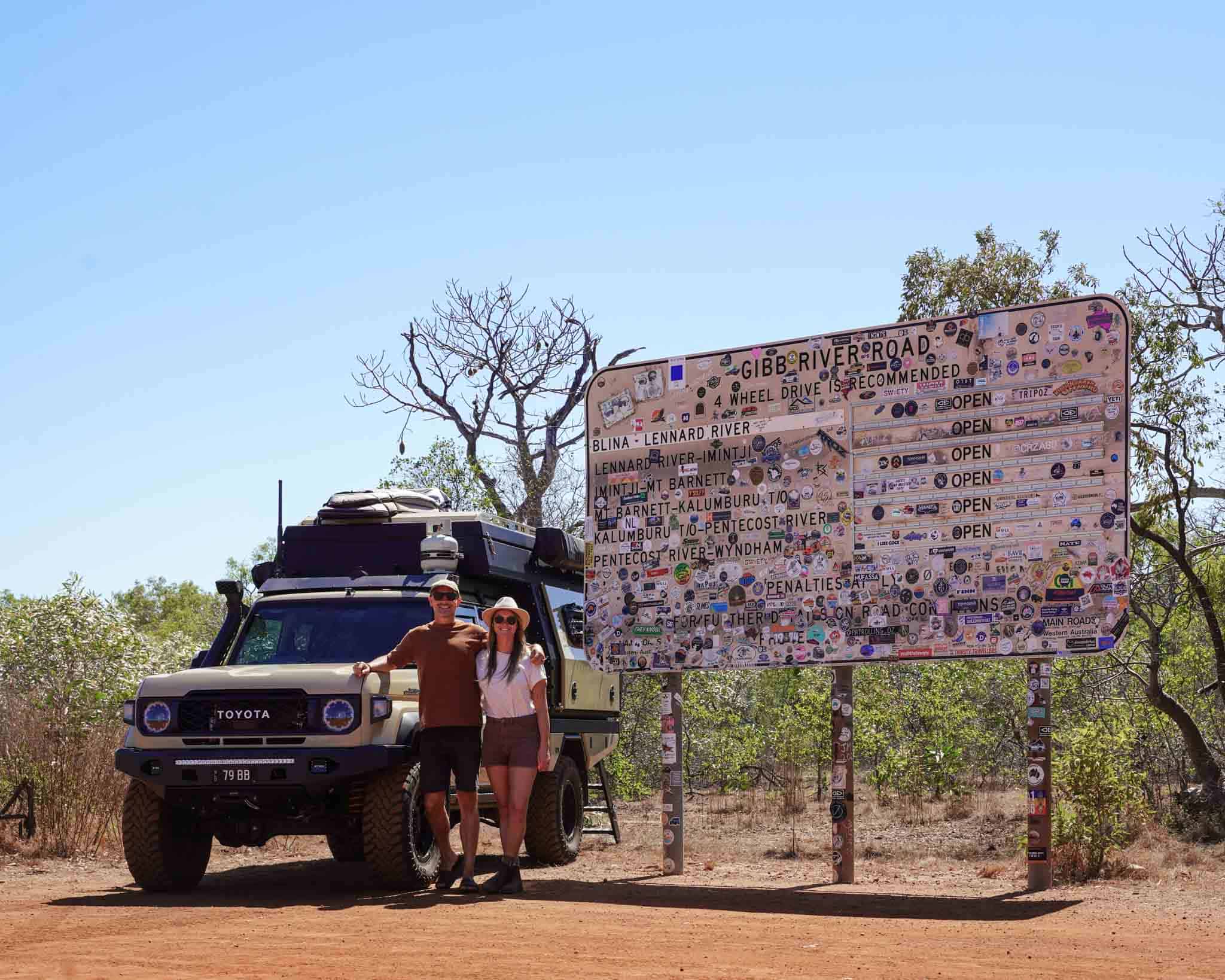
Stock up at Woolies. This is your last major shop for the next 14 days, check out the Boab Prison Tree, and then head towards the famous Gibb River Road sign to officially kick off your adventure.
Once the bitumen ends, the corrugations begin. Welcome to the Gibb!
Pick a spot at Lennard Gorge Free Camp, enjoy your first red-dust sunset, and settle in for an early night.

Day 2: Tunnel Creek & Windjana Gorge
Get up early and head down to Tunnel Creek. The drive looks short on the map but takes longer than you expect because of the corrugations.
You’ll need:
- A head torch
- A normal torch
- Clothes that can get wet
- Shoes suitable for water
Tunnel Creek is dark, dramatic and unforgettable. The waist-deep water and red-eyed freshwater crocodiles definitely add a bit of adrenaline to your second day on this Gibb River Road itinerary.
Afterwards, dry off and drive to Windjana Gorge. Have lunch at the day use area, then walk through the 3.5km that was once a coral reef system. You’ll see heaps of freshwater crocs sunbathing on the banks. It’s stunning, but not a place to swim.
Camp again at Lennard Gorge, avoiding a big drive days early on makes the whole Gibb River Road itinerary flow easier.

Day 3: Bell Gorge & Silent Grove Campground
Pack up camp and head towards Silent Grove, about a 2-hour drive:
Silent Grove Campground has:
- Hot showers
- Flushing toilets
- Online booking required
It’s the perfect base for exploring Bell Gorge, which is one of the most picturesque waterfalls on this entire Gibb River Road itinerary. You can relax, throw out a towel and swim at the natural pool all afternoon.
Head back to Silent Grove for a hot shower, dinner and a campfire.
➤ Do you want more details on the best gorges and waterfalls? Check out our guide to the best Gibb River Road gorges to prioritise your favourites.


Day 4: Extra Bell Gorge Time
Most people rush Bell Gorge, but if you’ve got the time, spend another slow morning exploring the pools before heading off.
Day 5: Adcock Gorge & Galvans Gorge
Pack up camp, enjoy a coffee and breakfast, and continue this Gibb River Road itinerary to Adcock Gorge. It’s about a 1,5 hour drive till the turn off and another 15-20 minutes till the carpark of the gorge. This drive is not caravan friendly. You’ll need to leave your van at the grassy bit just off the main road.
The drive to the gorge is a fun and easy 4WD track, and once you hit the carpark, it’s only a short walk to Adcock Gorge. This gorge is ringed by tall cliff walls with a deep, partly shaded swimming hole. Perfect for a morning dip!
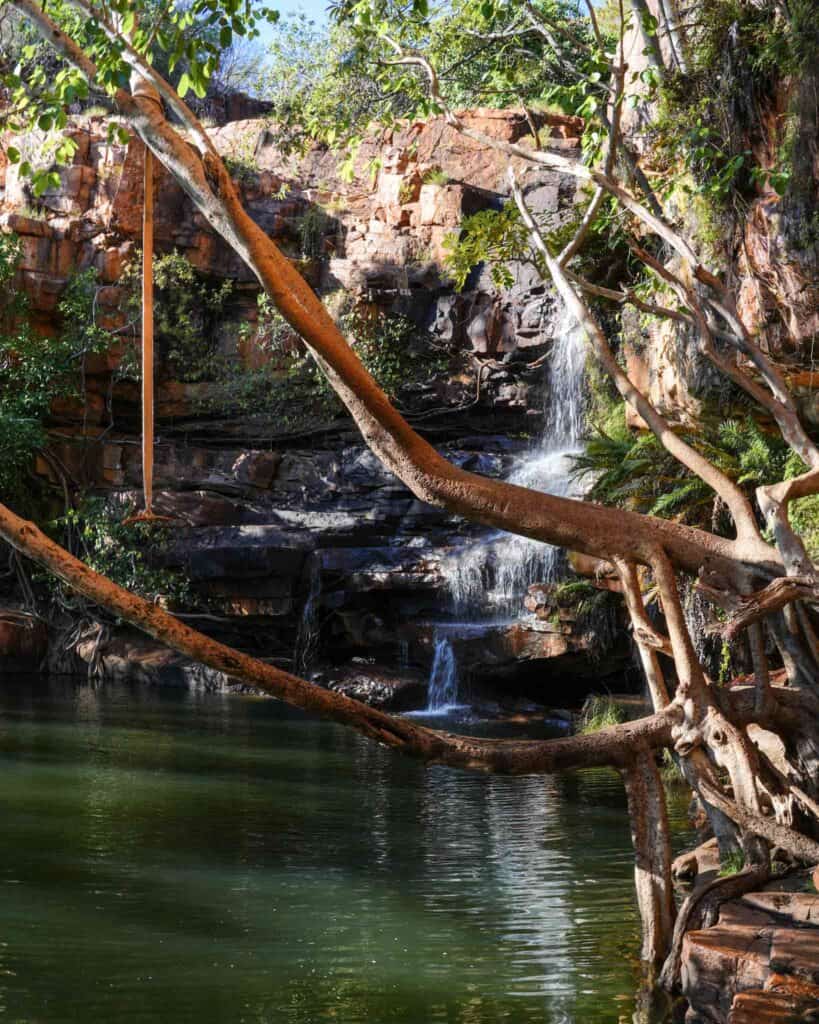
After lunch, continue to Galvans Gorge, just 30 minutes away. It’s one of the easiest gorges on the Gibb to access, and one of the most photogenic.
Don’t miss:
- The boab tree perched above the waterfall
- The rope swing. Fun for all ages!
- The perfect afternoon sun on the rock walls
There’s a gravel pit across the road where you can free camp for the night.
Day 6 & 7: Mt Barnett Roadhouse and Manning Gorge
If you like Galvans gorge as much as we do, and want to have it to yourself in the early hours of the morning. Do it! We slept at the gravel pit and went again at 7am and had it to ourselves for about two hours. Pure magic!
Now it’s time to head to Mt Barnett Roadhouse.
Here you’ll find:
- Fuel
- Telstra and Optus service – ideal to book dinner night at Mt Elizabeth Station in two days (see Day 8 of this Gibb River Road Itinerary)
- Freshly baked sourdough
- Convenience store supplies
- The famous Mt Barnett burger
- Manning Gorge Campground
At the roadhouse, you can book a campsite at Manning Gorge Campground. It’s $25 per person per night for the first night, $20 from the second night. There are flushing toilets and hot showers.
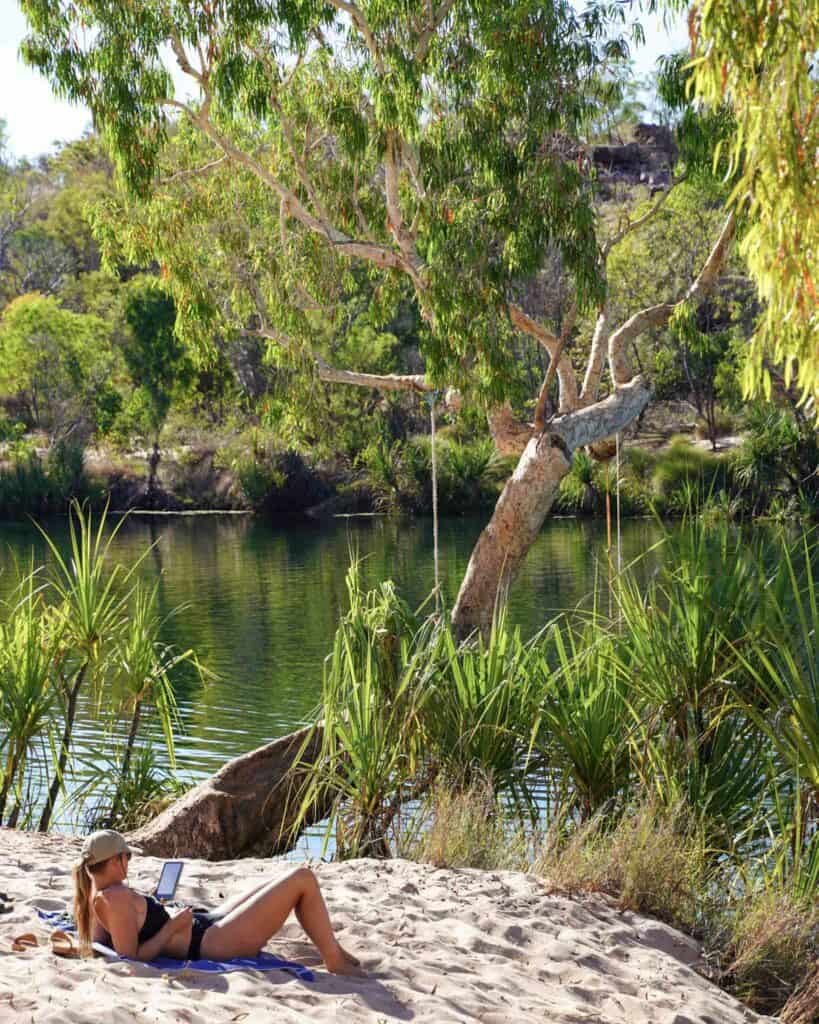
Set up camp, enjoy the beach and rope swing at Manning Creek at the campground, and over the next few days, you can walk as many times to Manning Gorge and the waterfall as you want. It’s one of the best experiences on this Gibb River Road itinerary.
Day 8: Mt Elizabeth Station
It’s hard to say goodbye to Manning Gorge campground, but it’s time to continue your journey. Today you’re heading to Mt Elizabeth station, one of the most authentic station stays on this Gibb River Road itinerary. And today, you’ll give yourself a break from cooking. Their dinner nights are with their local beef – Burton Beef – and it’s incredibly delicious.
Camping is $25 p.p., and dinner nights are $50 p.p. for a two-course meal using their own local Burton Beef. It’s honestly one of the best meals you’ll have on the Gibb.
During your stay, you can choose between two 4WD tracks (you’ll pay a one-time fee of $15 per vehicle for your entire stay)
- Wunnamurra Gorge: The ‘difficult’ 4WD track. This track leads you to a beautiful waterfall where you can swim. This is a full day trip, don’t underestimate the time.
- Warla Gorge: If you’re not too confident in 4WDing, you can head to Warla Gorge. This 4WD track is relatively ‘easy’ and brings you to the upper Hahn river.
Stay two nights if you want time to explore properly.
Day 9: Hahn River Free Camp
For the next few days, we’re slowing down a bit. It’s been full on for the past week, exploring many gorges and hikes, so now it’s time to enjoy the other incredible part of this Gibb River Road itinerary: the epic free camps.
Go early to Hahn River Free Camp. It’s about an hour’s drive, and you want to be at the free camp between 9 and 10 am, when people are leaving, to secure a great spot.
Find a spot next to the water, set up for the day and just enjoy a quiet day in the shallow waters of Hahn River.


Day 10: Gibb River Free Camp
Another day, another epic riverside free camp.
Gibb River Free Camp isn’t the best spot for swimming, but it’s peaceful, scenic and a great place to break up the drive.
Day 11: Ellenbrae Station
The Kimberley’s most iconic scones await! A must-do on this Gibb River Road itinerary!
Ellenbrae Station is famous four:
- Homemade scones with jam and cream
- Beautiful shady gardens
- Their private bush baths
- A quirky outback vibe
Make sure you book the Bush Baths ahead. A private hour soaking under the open sky while you wash away a week of Gibb dust.
- Camping is $25 per person per night
- Bush Bath is $90 for two for one hour (sunset hours are more expensive)

Day 12: Pentecost River Crossing & Free Camping
From Ellenbrae Station, it’s at least a 2 hour drive to Pentecost River Free camp, and there’s honestly nothing really in between. This part was also the worst corrugation we had on the entire Gibb, so take your time.
This day is all about the journey and not the destination. Take in all the scenery and stop at Cockburn Ranges Lookout before you cross the iconic Pentecost River.
Find a spot across the river. The further you drive alongside the river, the better the spots become. This is the last free camp along this Gibb River Road itinerary, and it’s a great spot to relax for the afternoon and to fish. Keep in mind that saltwater crocodiles are present, so don’t come too close to the water.
Day 13 – 14: El Questro
As soon as you leave Pentecost River free camp, you’ll be back on bitumen briefly before the turnoff to El Questro. Your last stop on this Gibb River Road itinerary.
Spend your final two days exploring:
- Amalia Gorge
- El Questro Gorge
- Zebedee Springs (mornings only)
- Emma Gorge on your way out. One of the best gorges in the Kimberley
You can camp at the station or book a private riverside camp spot.
➤ Are you planning to extend your trip? Read the full Gibb River Road Guide for more options


That’s a wrap of your Gibb River Road Itinerary
Travelling the Gibb is one of those trips you look back on and think: that was the adventure of a lifetime. Over 14 days, you’ve ticked off Kimberley icons like Windjana Gorge, Bell Gorge, Manning Gorge, Emma Gorge, El Questro, and everything in between. You’ve swum in remote waterfalls, explored ancient gorges, driven through red-dirt country, and camped under the bright Milky Way.
We hope this Gibb River Road itinerary will inspire you day-by-day, or use it as a flexible guide. Feel free to tweak it, and take out sections that excite you the most. No matter how you choose to do it, you’ll create memories that will last a lifetime. Happy travels!
Plan your gibb river road adventure
If you want to plan your Gibb River Road itinerary properly and avoid the overwhelm, start with these guides:
➤ Or explore all our Western Australia travel guides to help plan your trip.
Gibb River Road Itinerary FAQs
Is 14 days enough for the Gibb River Road?
Yes! 14 days is the perfect balance between seeing the highlights and not rushing. You’ll have time to visit key gorges, enjoy a mix of free camping and station stays, and still have a few slower days built in. If you want to include Mitchell Falls or explore more side tracks, consider adding an extra 3 to 4 days.
Can you do the Gibb River Road in 2 weeks?
Absolutely! A 2-week Gibb River Road itinerary is the sweet spot for most travellers. It allows you to cover the full route from Derby to Kununurra while still having time to hike, swim, and enjoy the experience. Not just drive it.
Do you need a 4WD for this Gibb River Road Itinerary?
Yes, a high-clearance 4WD is essential for this itinerary. The road conditions include corrugations, creek crossings and rough sections that are not suitable for standard 2WD vehicles. Some of the best gorges also require short 4WD tracks to access.
Can you take a caravan on the gibb river road?
Yes, but with limitations. You can tow an off-road caravan along the main Gibb River Road, but many side tracks to gorges are not caravan-friendly. There are also no powered campsites along the Gibb River Road, so you need to be fully self-sufficient.
The content on Bush and Bay is based on our personal experiences and opinions. While we strive to provide accurate, up-to-date information, travel conditions and recommendations may change over time. We do not take responsibility for any decisions or actions made based on our content. Always conduct your own research and consult with professionals where necessary. Bush and Bay may earn a small commission from affiliate links, but this does not influence our reviews or recommendations. We only endorse products and places we have personally tested and believe in.

Your trip sounds fantastic and quite inspiring, it a trip I’ve waited a long time to do.
I am planning a trip for mid to late August. I have a high clearance caravan with independent suspension( no axle ) and a Amorim 4×4 with a 50mm lift suspension kit fitted . I am told it will be fine on the Gibb river road it self your thoughts ?
Thanks so much, Mike! The Gibb is still one of our favourite parts of Australia! Mid to late August is a great time to go, and from what you’ve described, your setup sounds well-suited to do the main Gibb River Road. We saw plenty of capable off-road caravans out there. Conditions do change throughout the season, so it’s hard for anyone to guarantee how the road will be at the exact time of your travels… For us, the main thing was lowering tyre pressure and taking it slow. Some tracks to gorges (like Adcock Gorge, for example) are not suitable for a caravan, so you might have to leave the van behind for some day trips. But otherwise, it sounds like an epic setup, and you’ll have an amazing trip!