The Gibb River Road 2026 – Complete guide, itinerary, map & travel tips

Are you planning on tackling the Gibb River Road in 2026? If you are, you have started planning a trip of a lifetime. It’s one of those Western Australia road trips you’ll talk about for years, and it definitely pays to go in prepared.
When I first sat down to plan our Gibb adventure, I honestly didn’t know where to begin. We knew we were travelling from west to east, from Derby to Wyndham, but that was pretty much the extent of my “plan”. I’d spoken to a few people who did the Gibb years ago, and the picture they painted was: it’s remote, no phone reception for weeks, no food, limited fuel, and hardly another person in sight, and a whole lot of “good luck”. I also didn’t know how or when to book the stations, not knowing when or where I would be at what time. For someone who loves planning, it was chaos in my head.
If that’s what you are expecting, take a breath. Things have changed. The Gibb is still remote and challenging, but it’s no longer the isolated track it once was. And that’s exactly why having a clear Gibb River Road map makes such a difference. More travellers discover it every year, and while that means it can feel a little busy at times, it doesn’t take away how incredible it is. We spent almost four weeks exploring the Gibb River Road, hiking every gorge that was open, swimming in every waterhole we could find, and tackling almost every track.
After that much time on the Gibb, I feel like we’ve finally gathered everything I wished I’d been able to find before we left. So here it is: a complete, easy-to-understand guide to help you plan your own Gibb River Road adventure.


Watch our Gibb River Road YouTube episodes
If you’re more of a visual planner, we’ve also created a three-part YouTube series about our time on the Gibb River Road. These episodes are packed with tips, a real feel for what the road is actually like, and plenty of scenic footage of the gorges, waterfalls, campsites and the tracks you’ll be tackling.
It’s a great way to get a sense of the place before you go, and to see whether certain hikes, waterholes or stations are your style.
About the Gibb River Road
The Gibb is a 660 kilometres dirt road that cuts through the heart of the Kimberley. It’s beautiful, wild, red-dirt country, but it’s also rough. Expect heavy corrugations, creek crossings, sometimes rocky or sandy sections, and a lot of shaking. A proper 4WD is essential. Not just for safety, but because some of the best spots require a bit of skill and clearance.
What to expect?
If you’re planning your first trip along the Gibb River Road, it’s worth understanding what you’re getting yourself into. We’ve put together this guide based on our own experience, but you can also check out this detailed breakdown on how to prep your 4WD and what to expect on the Gibb River Road by Club 4X4.
How long do you need?
Two weeks is the sweet spot. That gives you enough time to enjoy the major gorges, waterfalls and stations without rushing. If you want to add in Mitchell Falls, you’ll need three to four extra days. It’s a big detour and absolutely worth it, but don’t squeeze it into an already full itinerary, you’ll only stress yourself out.
➤ If you like a ready-made plan, we also put together a 14-day Gibb River Road itinerary you can copy or tweak to suit your adventure.
Gibb River Road Map
To get started, here’s a map of Gibb River Road that will surely guide you through it. If you want a physical copy, head into the Derby Visitor Centre for an A3 format for just $1. A must, I would say!
➤ You can access our full interactive Gibb River Road Map here, including fuel stops, where to fill up with drinking water, (free) camps and key highlights.

Permits
The good news is that you won’t need any permits if you’re just driving the Gibb River Road and visiting the free gorges like Adcock Gorge and Galvans Gorge. But a few spots do require passes. Tunnel Creek, Windjana Gorge, Lennard Gorge, and Bells Gorge are all part of Explore Parks WA, so you’ll need a National Parks Pass to visit those. Mitchell Falls and El Questro also have their own private permits, which you’ll need to purchase before you head in. It’s all pretty straightforward, but worth sorting out ahead of time so you’re not dealing with it on the road.
➤ If you’re planning to visit one of the most iconic stops along the Gibb, read our full guide to Mitchell Falls before you go.
➤ Heading into El Questro? Here’s everything you need to know about things to do and El Questro camping.
Before you go: the important stuff
Fuel Stops gibb river road
First of all, fuel. It was my biggest stress before we left, especially because our second tank started leaking right before the trip. Turns out it was all for nothing. There are at least five fuel stations we’ve come across during our Gibb River Road trip.
Along the Gibb, you’ll find fuel at:
- Mount Hart Wilderness Lodge – Diesel Only
- Imintji Roadhouse – Diesel Only
- Mt Barnett Station – Petrol & Diesel
- Drysdale Station – Petrol & Diesel
- El Questro – Petrol & Diesel
These are still spaced out, so always keep an eye on your range.
Water
You’ll also be able to refill water tanks at a couple of places. We topped up at Mt Barnett Station and again at Drysdale Station after visiting Mitchell Falls, and we carried a 150L water tank.
Insurance
This one’s important. The Gibb feels busy these days, but it’s still a remote track with lots of corrugations and things do break. You want to make sure you have vehicle insurance that covers you off-road. We’ve heard that getting towed out from the Gibb will cost at least $20,000. That is WILD! Take a close look at your vehicle insurance before you leave. Not every policy covers off-road driving, and the last thing you want is to find that out the hard way. We chose Club 4X4 as they cover you anywhere you can legally go in Australia, which took away another worry.
Phone reception
Phone reception is patchy, but you’ll find Telstra and Optus service or Wi-Fi at most stations. These days, plenty of travellers bring Starlink. So if you want reliable reception the whole way, that’s your safest bet.
Food & Alcohol
Your best option is to stock up fully in Derby or Kununurra before you start. But if you run low on meats, veggies or other essentials, most stations have a little convenience store where you can buy some basic stuff, but you’ll pay for it. We only have a 65L fridge, which normally is more than enough for us to go a week off grid, but we’ve spent a fair bit of time on the Gibb, so we ran out of food a few times, luckily we managed to restock pretty well:
- Mt Barnett station sells home made sourdough and essentials
- Some stations sell meat
- A few stations have licensed bars and restaurants
Dump Points
There are NO dump points on the Gibb River Road, nor at the stations.
Gibb River Road Stations
If we do get the chance to go out for lunch or dinner, we’ll take it! Here’s where we stopped in for a feed:


Mt Barnett Station
Famous for its burgers. And honestly worth stopping for.
Mt Elizabeth Station
They run pizza nights, burger nights and full dinner nights. Pizza nights and burger nights can be booked on arrival, but if you want to enjoy the proper dinner nights with local beef, you’ll need to book ahead.
Every day they cook a different variation of their own beef, but when we were booked in, it was steak night, and it was insanely good. Melt-in-your-mouth good.
Bonus: Mt Elizabeth also has a licensed bar! It’s such a vibe to go hang out on the grass in the late afternoon with a nice wine or beer, plus they light a massive campfire in the evening for everyone to enjoy.
Drysdale Station
Great spot for lunch or dinner. We stopped in for lunch after Mitch Falls for a steak frites and a wine. Absolute gold after a few days up north.
Ellenbrae Station
If someone has done the Gibb, they will 100% ask you: “Did you stop for the scones at Ellenbrae?” These guys baked 21,561 scones in 2025. So yes, get one.
El Questro Station
Lastly there’s El Questro station, which has a restaurant and licensed bar. Enjoy happy hour at the bar and head to the restaurant (steakhouse) afterwards for a delicious candlelight dinner.
A bonus for food lovers – Gourmet Camp Oven Experience
Once you roll into Kununurra at the end of the Gibb, treat yourself. The Gourmet Camp Oven Experience is a four-course dinner in a beautiful Kimberley setting. And after weeks of dusty camp cooking, it just hits the spot.
Camping along the Gibb
We’ve put together a separate full camping guide, but here’s the short version:
- There are loads of station stays with hot showers and flushing toilets
- National Park campsites are around at the beginning of the Gibb (west) – near Windjana Gorgo and Bell Gorge
- Epic free camps with no amenities
Best of all, you don’t need to book most stations in advance. It was a huge relief for me. I like planning, but the Gibb is one place where you really don’t want to lock yourself in. We just rocked up at each station and booked a site on the spot with no issues.
➤ For a full breakdown of the best places to stay, read our complete Gibb River Road Camping Guide.

Road conditions and tracks
So how bad is the road? Here’s the truth: road conditions change constantly. So it’s hard to give you proper advice on the conditions. What’s smooth one week can be brutally corrugated the next, and vice versa.
But the corrugations can get rough. I won’t lie, some days I ended up with a headache after driving all day.
But in terms of 4WD difficulty, it isn’t technical. The biggest thing is clearance for water crossings. The rest is just corrugations that shake everything loose. A few tips:
- Drop your tyre pressures
- Check and tighten bolts daily
- Carry a toolkit and spare parts
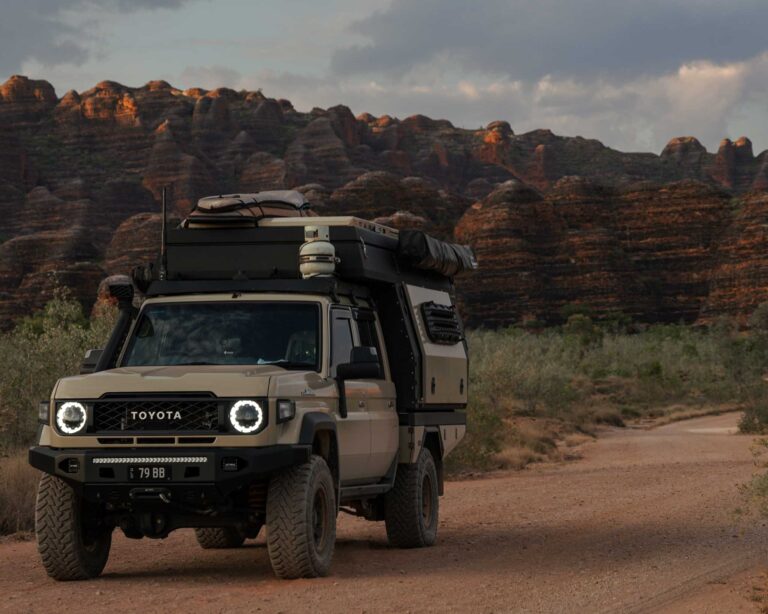
We lost a bolt and a rear shock come loose. On a brand new 79 series… So don’t assume your new vehicle is immune to the Gibb shake-down.

Travelling the Gibb with a dog
Parts of the Gibb are dog-friendly, but many waterfalls and gorges sit inside National Parks. That means no dogs allowed. You can still enjoy some gorges, campsites and hikes with a dog. You just need to be selective with where you stop.
Why do it?
Because the Kimberley is unlike anywhere else in Australia. The waterfalls, red cliffs, crystal-clear swimming holes, ancient landscapes, the feeling of being somewhere truly wild. It’s just magic.
Even with more people travelling the Gibb these days, the sense of adventure hasn’t disappeared. Far from it. It’s still a place that gives you goosebumps, makes you slow down (mostly due to the corrugations), and make you appreciate how special this part of Australia really is.
We’ve put together a full list of all the gorges, waterfalls, walks and stations along the Gibb River Road, with details on what each one offers. It’ll help you decide what’s worth adding to your itinerary and what you can skip based on your timing.
➤ Start with our guide to the best Gibb River Road Gorges to decide what’s worth adding to your trip.
Plan your Gibb River Road Adventure
If you want to plan this trip properly, and avoid the overwhelm, start with these guides:
➤ Or explore all our Western Australia travel guides to help plan your trip.
Gibb River Road FAQs
Still have questions before tackling the Gibb River Road? Here are the most common once we get:
Do you need a 4WD for the gibb river road?
Yes, a high-clearance 4WD is essential for the Gibb River Road. The route includes heavy corrugations, creek crossings and rough sections that are not suitable for 2WD vehicles.
How long does it take to drive the Gibb River Road?
Most travellers take between 10 and 14 days to drive the Gibb River Road. This gives you enough time to explore the major gorges, enjoy a mix of free camping and station stays, and avoid rushing through the experience. If you want to include detours like Mitchell Falls, allow an extra 3-4 days.
What is the best time to visit the Gibb River Road?
The best -and only- time to visit the Gibb River Road is between May and September. Early in the season, you’ll see stronger waterfalls and greener landscapes, while later in the season, it offers fewer crowds but sometimes stagnant waterholes.
Are there fuel stops on the gibb river road
Yes, there are several fuel stops along the Gibb River Road, including Mount Hart, Imintji Roadhouse, Mt Barnett Roadhouse, Drysdale River Station and El Questro.
Can you take a caravan on the gibb river road?
Yes, you can take an off-road caravan on the Gibb. Many travellers tow off-road caravans or camper trailers, but you’ll need to leave them behind when visiting certain gorges and side tracks.
Are there crocodiles on the gibb river road?
Yes, both freshwater and saltwater crocodiles live in the Kimberley region. Freshwater crocodiles are commonly seen in gorges like Windjana Gorge, while saltwater crocodiles can be present in some areas, such as the Pentecost River. Always follow local signage and never swim unless it’s clearly safe to do so.
Do you need permits for the gibb river road?
You don’t need a permit to drive the Gibb River Road itself, but some areas require passes. National Parks like Windjana Gorge and Bell Gorge require a WA Parks Pass, while places like Mitchell Falls and El Questro have their own entry and camping fees.
The content on Bush and Bay is based on our personal experiences and opinions. While we strive to provide accurate, up-to-date information, travel conditions and recommendations may change over time. We do not take responsibility for any decisions or actions made based on our content. Always conduct your own research and consult with professionals where necessary. Bush and Bay may earn a small commission from affiliate links, but this does not influence our reviews or recommendations. We only endorse products and places we have personally tested and believe in.
Disclaimer: Testimonials do not contain any financial product advice and are based on the individual’s circumstances. Issued by Club 4X4 Pty Ltd as an AR of Lifestyle Insurance Group who is acting (under its own AFSL) on behalf of the insurer QBE Australia Limited. Excesses, limits and exclusions apply. Always read the PDS & TMD at club4X4.com.au.