

Mount Bruce Hike Guide: Why this challenging climb is 100% worth it

If you’re heading into Karijini National Park and looking to add one proper challenge to your trip, Mount Bruce should be high on your list.
At 1,234 metres, Mt Bruce is the second-highest peak in Western Australia. And while it’s not the most technical hike in the country, it’s one that demands effort, preparation, and a bit of determination.
In many blogs, you’ll find the ideal time to hike Mount Bruce is for sunrise, leaving in the middle of the night. We did the Mount Bruce hike during the late afternoon, and honestly, it turned out ot be one of the highlights of our entire time Karijini. This isn’t just about reaching the summit. It’s about the views, the changing light, and the feeling of standing above the iconic Pilbara landscape.
In this guide, I’ll walk you through everything you need to know about hiking Mount Bruce. From what to expect on the trail to when to go and how to properly plan it.
➤ To fully plan your Karijini adventure, read through our complete guide to Karijini National Park.
Why hike Mount Bruce?
Mt Bruce – also known as Punurrunha – is one of those hikes that feels like a proper achievement.
It’s not a casual stroll. It’s a 9km return hike, with steep sections, uneven terrain, and a bit of exposure near the summit. But what makes Mount Bruce special is the reward.
From the top, you’re looking out over the vast Pilbara. Endless red ridgelines, deep valleys, and that raw, untouched outback.
Mt Bruce Hike Overview
Before you head off, here’s what you need to know:
- Distance: 9km return
- Time: 4 to 6 hours
- Difficulty: Class 5 (challenging)
- Elevation: 1,234 metres
- Trail type: Out and back
This is one of the more demanding hikes in the Karijini region. For us, this was the only hike that took exactly the time mentioned above: 6 hours…
When is the best time to hike mount bruce?
This is where I’ll probably disagree with most advice you’ll see online. A lot of people recommend doing Mount Bruce for sunrise. We wouldn’t. Here’s why:
The trail faces west, which means the light is behind you in the afternoon, and that completely transforms the experience.
We started our Mt Bruce hike at 2 pm, reached the summit around 4 pm and made our way down as the sun was setting.
And honestly? It was magic. The entire landscape lit up in deep reds and golds. The shadows stretched across the valleys and the temperature was more manageable than hiking in the middle of the day.
Doing Mt Bruce for sunrise means:
- Hiking in the dark on uneven terrain
- Missing the best light and views on the way up
- Dealing with colder conditions
For us, sunset is the clear winner.

What to expect on the Mount Bruce trail?
The Mount Bruce trail is varied, which is part of what makes it such a challenge.
The first section: the easy start
The hike begins relatively gently, easing you into it. The trail is clear, you’ll start gaining elevation gradually, and you look over a big mining site, which is pretty impressive.
The Middle Section: Steeper Climb
As you continue, the incline increases and the terrain becomes more uneven. For us, this was where Mount Bruce earns its reputation. Steep climbs, chains, and some exposure. It’s not technical climbing, but you need to stay focused. It actually felt like it was the end of the trail, but it wasn’t. There’s a third section.
The Final Section
The last stretch is less steep, goes through more plants and trees, but it feels never-ending. If you think you reached the summit, think again; there’s always a higher point.
But once you reach the summit, it’s all worth it.
Is Mount Bruce a difficult hike?
Short answer: yes, but it’s manageable.
Mount Bruce is graded as a Class 5 hike, which means steep sections, uneven ground and some exposure. You don’t need to be an expert hiker, but you do need a reasonable level of fitness, good balance and the ability to take your time. If you’re unsure, just go slow. There’s no rush.
What to bring for the Mount Bruce hike?
Again, this hike is not one to underestimate. Here’s what I’d recommend bringing:
Water
At least 2-3 litres per person. There’s no water on the trail.
Proper footwear
Grip is essential. The terrain is uneven and can be slippery.
Snacks
You’ll need energy, especially for the walk back.
Hat & Sunscreen
The track is exposed, there’s no shade.
Warm layer
Evenings can get cold, especially if you’re staying for sunset or still decide on doing the sunrise hike.
How to fit Mount Bruce into your Karijini National Park Trip?
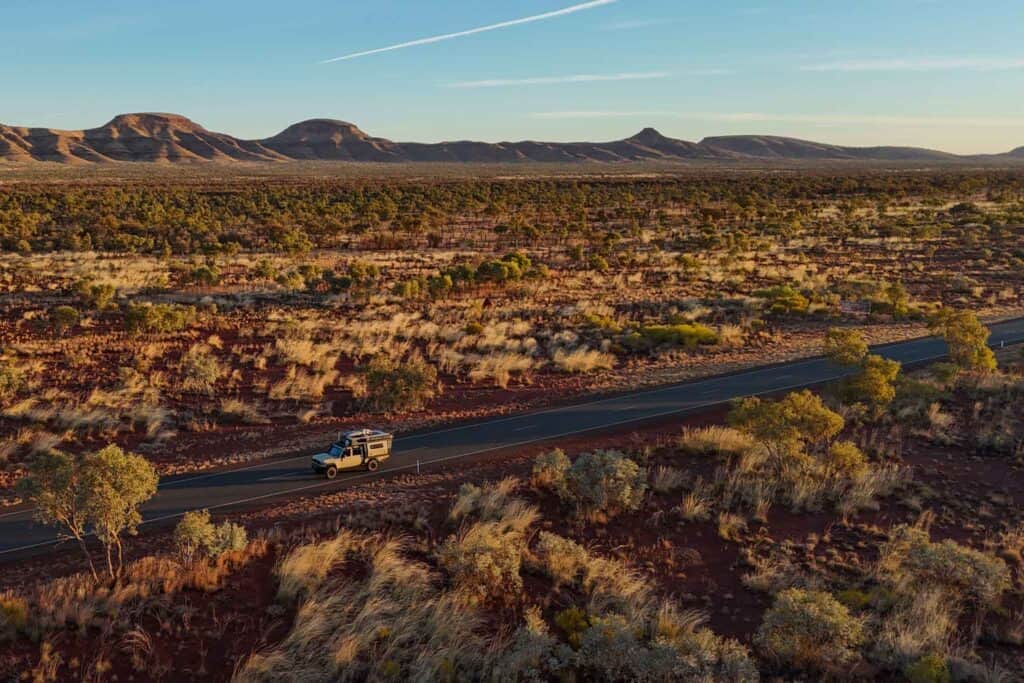
Mount Bruce sits just outside the main gorge system.
➤ If you haven’t mapped out your trip yet, start with our complete guide to Karijini National Park
This hike goes well when you want:
- A rest day from gorges
- A sunset-focused day
- A nearby camping stay
➤ Mt Bruce is a full-day adventure. If you’re unsure if it suits your itinerary, have a look at our 3- to 7-Day Karijini Itinerary to make sure it fits your schedule.
There are some great free camps close to the Mount Bruce trailhead, which makes an afternoon hike even easier to plan.
Where to stay near Mount Bruce
If you’re planning to hike Mount Bruce for sunrise or sunset, staying nearby makes a big difference. You don’t want to drive long distances in the dark or rush your hike. There are free camps available near Mount Bruce.
➤ For more detailed information, read the full guide to camping in Karijini.
Safety tips for hiking Mount Bruce
The conditions at Mount Bruce can change quickly. Here are a few key things to keep in mind:
- Always check conditions with the Karijini visitor centre before heading out.
- Start at the right time and avoid midday heat.
- Don’t rush.
- Be careful on descent – most accidents happen on the way down.
Is Mount Bruce worth it?
Without a doubt.
Mount Bruce is a hike that gives you a completely different perspective of the Pilbara. While the gorges in Karijini National Park are all about going down into the landscape, Mount Bruce is about seeing the region from above.
It adds something completely different to your trip. And if you time it right, that descent in golden light? It’s something you won’t forget.
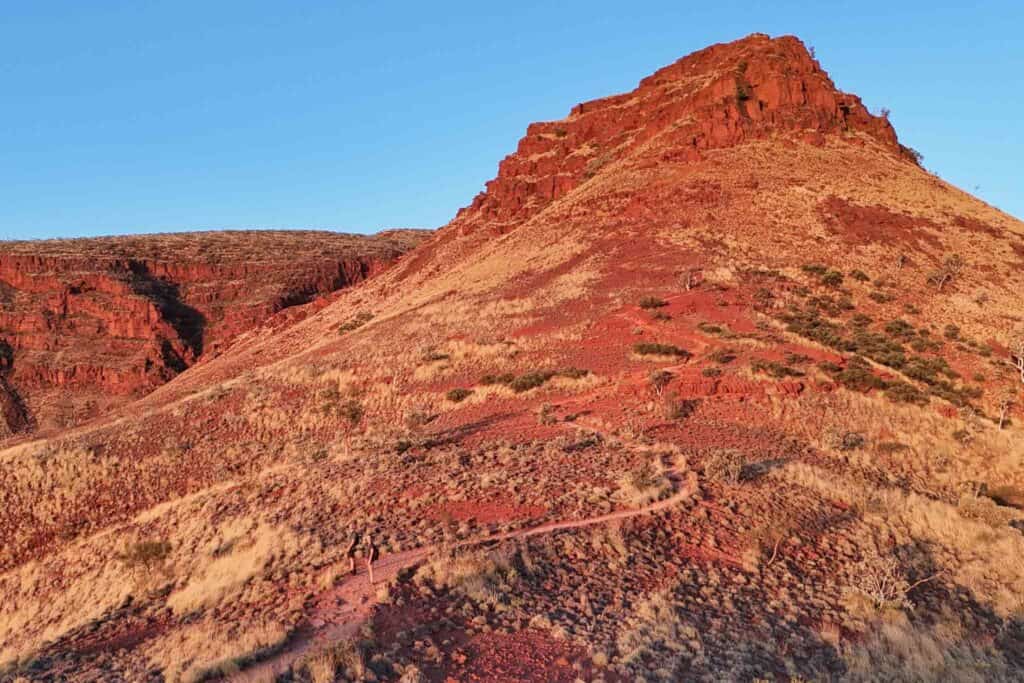
Mount Bruce is not the easiest hike in Karijini, but that’s exactly why it stands out. It’s a challenge, it takes time, and it rewards you properly.
If you’re already making the effort to get out to Karijini, adding Mount Bruce to your itinerary is a no-brainer.
Just plan it well, take your time, and go for that afternoon hike. You won’t regret it.
Plan your Karijini Adventure
To make the most of your time in the region:
➤ Full Overview: Guide to Karijini National Park
➤ 3- to 7-Day Karijini Itinerary
FAQs about Mount Bruce
How hard is the Mount Bruce hike?
The Mount Bruce Hike is considered a challenging class 5 hike. The 9km return trail includes steep sections, uneven terrain and some exposed areas near the summit. While it’s manageable for reasonably fit hikers, it requires good balance, proper footwear and careful footing.
How long does the Mt Bruce hike take?
The Mt Bruce hike typically takes between 4 and 6 hours return, depending on your pace and how long you spend at the summit. Allow extra time if you plan to stop for photos or hike during the afternoon to catch sunset views.
What is the best time of day to Hike mt Bruce?
The best time to hike Mt Bruce is in the late afternoon. The trail faces west, which means you’ll get better light and cooler temperatures later in the day. Hiking Mount Bruce for sunset offers incredible views across the Pilbarra, while hiking for sunrise requires navigating uneven terrain in the dark.
The content on Bush and Bay is based on our personal experiences and opinions. While we strive to provide accurate, up-to-date information, travel conditions and recommendations may change over time. We do not take responsibility for any decisions or actions made based on our content. Always conduct your own research and consult with professionals where necessary. Bush and Bay may earn a small commission from affiliate links, but this does not influence our reviews or recommendations. We only endorse products and places we have personally tested and believe in.
