

Purnululu National Park Guide: Bungle Bungles, Costs and camps

Are you considering a trip to Purnululu National Park in Western Australia and wondering if it’s actually worth the effort? This is the guide you need.
There’s no shortage of information out there about Purnululu National Park and the Bungle Bungles, but when we were planning our road trip through the Kimberley, one question kept coming to mind: Is it really worth the detour?
The Kimberley is huge. Distances are long. Roads can be rough. And by the time you even consider visiting Purnululu National Park, you’ve probably already explored places like the Gibb River Road or El Questro. Adding another remote destination isn’t a small decision.
After spending two full days exploring Purnululu National Park, hiking through the gorges and seeing the Bungle Bungles from both the ground and the air, we can finally give you a straight answer. Along with everything else, you need to plan your visit properly.
Purnululu National Park at a glance
- Location: Kimberley Region, Western Australia
- Famous for: Bungle Bungle Range (striped sandstone domes)
- Best for: Hiking, remote camping, scenic flights
- Minimum time needed: 2-3 days
- Access: 4WD only
➤ If you’re planning a Kimberley road trip, Purnululu National Park is one of the most unique places you can visit.
Where is Purnululu National Park located?

Purnululu National Park is located in the remote Kimberley region of northwest Western Australia, roughly 200km south of Kununurra and 100km north of Halls Creek.
Purnululu National Park is the traditional homelands of the Gija and Jaru people, and was recognised as a UNESCO World Heritage site in 2003. Purnululu National Park covers an impressive 239,723 hectares and protects one of Australia’s most unique landscapes.
At its heart lies the Bungle Bungle Range, an area of around 45,000 hectares. This is where you’ll find the famous striped sandstone domes, deeply carved gorges and narrow chasms that make the Bungle Bungles instantly recognisable.
Why visit Purnululu National Park?
The Bungle Bungles is one of the most unique landscapes in Australia. It’s not just another national park. It’s a place that feels completely different from anything else in the Kimberley.
The combination of ancient geology, remote access and dramatic scenery makes Purnululu National Park one of the most memorable stops in Western Australia.
➤ To learn more about this national park, read our “15 Surprising Facts about the Bungle Bungles Most Travellers Don’t Know”.
Best time to visit Purnululu National Park?
The best time to visit Purnululu National Park is during the dry season between May and September, when roads are open and temperatures are more manageable.
How to visit Prunululu National Park?
There are three main ways to visit the Bungle Bungles:
- 4WD access (most common)
- Scenic Flights (from Kununurra)
- Guided tours
Best things to do in the Bungle Bungles
The main reason people visit Purnululu National Park is to explore the Bungle Bungle Range, but there’s more to it than just the domes.
➤ Check out our 3-Day Bungle Bungles Itinerary to plan your trip properly.
Things to know before visiting Purnulul National Park
There are a few important things we wish we’d fully understood before visiting Purnululu National Park. Knowing these ahead of time makes planning much easier.
The park is split into two very different areas
One of the most important things to know about Purnululu National Park is that it’s divided into a northern end and a southern end. And they feel like two completely different places.
Northern end of Purnululu National Park
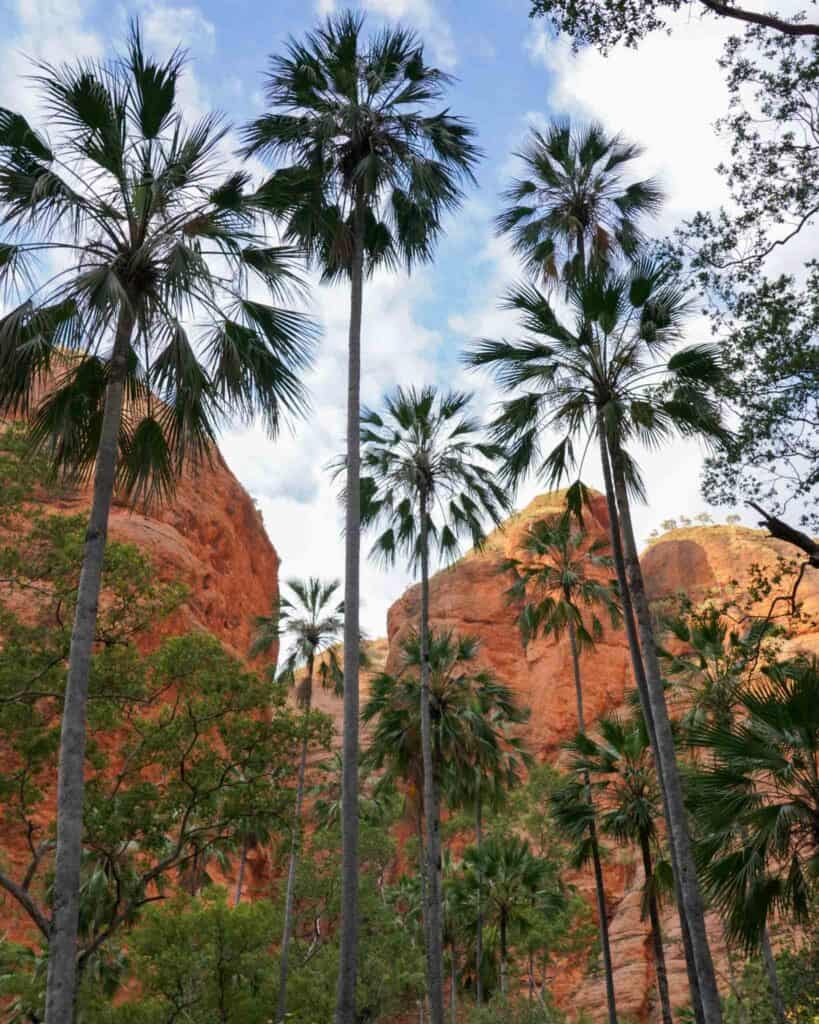
The northern section of Purnululu National Park is characterised by open woodlands, spinifex-covered plains and dramatic cliff faces. This is where you’ll find places like Echidna Chasm, Mini Palms Gorge and Homestead Valley.
The landscapes here feel raw and expansive, and the walks often involve narrow chasms with towering rock walls and surprising pockets of greenery, thanks to the Livistona palms that thrive in these sheltered areas.
One thing we didn’t expect was how different the hiking experience feels in the north compared to the south. The walks here are less about iconic viewpoints and more about exploring narrow spaces, squeezing through rock formations and stepping into cooler microclimates hidden inside the chasms.
Echidna Chasm is one of the highlights, especially around midday when the light filters down into the gorge, creating a glowing orange effect on the walls. Timing matters here more than you think, so plan your visit carefully if you want to see it at its best.
Mini Palms Gorge is another standout, and slightly less crowded. The walk takes you deeper into the landscape, with sections that feel surprisingly lush compared to the dry surroundings. It’s one of those walks where you don’t expect much at the start, but it gets better the further you go.

Southern end of Purnululu National Park
The southern end is where you’ll find the Bungle Bungles. The southern end of the national park is home to the iconic beehive-shaped domes, Cathedral Gorge and Piccaninny Creek.
This area feels like another world. Here you’ll find many walks that take you right into the heart of the Bungle Bungle Range.
This is the part of Purnululu National Park most people picture before arriving. The striped domes are just as impressive in real life, and walking amongst them gives you a completely different perspective compared to photos.
Cathedral Gorge is one of the most memorable spots in the entire park. The walk itself is relatively short, but stepping into the gorge feels like entering a natural amphitheatre. The acoustics, the scale, and the way the light hits the rock make it one of those places you’ll remember long after your trip.
Picaninny Creek is where you really start to understand the scale of the Bungle Bungle Range. Even if you don’t hike the full trail, walking part of it gives you a sense of how vast and ancient this landscape really is.


Don’t underestimate the size of the park. It’s around 47 kilometres between the northern and southern ends, which takes roughly 80 minutes driving on park roads. In total, Purnululu National Park offers 14 walking trails spread across both sections.
What this means in reality is that you need to plan your days properly. You can’t just “pop over” to the other side of the park. Moving between the northern and southern sections takes time, and the road conditions mean you’ll be driving slower than usual.
A common mistake is trying to do both ends in one day. It’s technically possible, but you’ll spend more time driving than exploring. If you want to experience Purnululu National Park properly, split your time between the two areas.
Vehicle Access Permit
You’ll need to purchase a vehicle access permit to enter the National Park. You can buy your permit online at the official National Parks website.
Purnululu Visitor Centre
The Purnululu Visitor Centre is usually open from April or May through to late September, depending on weather and road conditions. Opening hours are typically 8am to 12pm and 1pm to 4pm.
Here you can:
- Register your arrival in Purnululu National Park
- Pick up maps and information
- Buy cold drinks, snacks and souvenirs
- Access Wi-Fi
- Get up-to-date information from knowledgeable staff
We found the staff genuinely helpful when it came to planning walks and understanding current conditions in the park.
TIP: Don’t skip the visitor centre, even if you think you’ve planned everything. Conditions in Purnululu National Park change quickly, especially with road access and track closures. Getting local advice here can make a big difference to your experience.
No drones within Purnululu National Park
Drone use is not permitted in the national park. The airspace over the Bungle Bungles is surprisingly busy due to scenic helicopter flights, so no drones.
This is strictly enforced, and for good reason. Helicopter flights are a big part of the experience in this national park, and safety always comes first. If you’re hoping for areal views, your best option is to book a scenic flight.
Fuel and supplies
There’s no fuel available within Purnululu National Park. Make sure you’re fully fuelled before entering and have enough to cover:
- The access road
- Driving between the northern and southern end
- Your return journey
➤ To find the nearest fuel stops, head over to our Bungle Bungles map.
This (and water) is one of the most important things to plan properly. The access road alone is long, corrugated and slow. You’ll be covering more distance inside the park than you might expect. Running low on fuel out here is not something you want to deal with.
Be prepared for the access road
The road into Purnululu National Park is part of the experience, but also one of the biggest challenges. Expect a long, corrugated dirt road that can take anywhere from 2 to 3 hours depending on conditions.
Road conditions change throughout the season, so what you hear from other travellers may not reflect what you experience. Drive to the conditions, lower your tyre pressure and take your time.
➤ To learn more about road conditions, read our Bungle Bungles 4WD Guide.
No swimming spots (and the heat is real)
Unlike other parts of the Kimberley, Purnululu National Park doesn’t have many reliable swimming holes. This means you don’t have that easy way to cool off after a hike.
During the hotter months, temperatures can push well above 35-40 degrees, so planning your walks early in the morning or late in the afternoon is essential.
Limited Mobile Reception
There’s little to no mobile reception once you’re inside Purnululu National Park. Once you’re in, you’re completely off-grid.
Make sure you download maps beforehand (the latest at the visitor centre), let someone know your travel plans, and carry enough water and supplies.
Distances feel longer than they look
On a map, distances in Purnululu National Park don’t seem that big. But once you factor in road conditions, heat and walking times, everything takes longer than expected.
Give yourself more time than you think you need. This is not a place to rush.
Respect the cultural significance
Purnululu National Park is the traditional land of the Gija and Jaru people, and it holds deep cultural significance. Respect signage, stay on marked tracks and take the time to understand the importance of the area. It adds another layer to the experience beyond just the scenery.
Camping in Purnululu National Park
Camping is one of the best ways to experience Purnululu National Park, especially if you want to see both ends of the park without rushing.
There are two designated campgrounds within the park, and there are also options near the main road. Staying overnight within the park allows you to experience Purnululu early in the morning and late in the afternoon when the light over the Bungle Bungles is at its best, and temperatures are ideal for hiking.
➤ We’ve shared more detailed information in our dedicated Purnululu National Park Camping Guide.
How much does it cost to visit Purnululu National Park?
Purnululu National Park is not a cheap destination, and this is something you need to factor into your planning. Here’s a realistic breakdown:
- Park entry fee: WA Parks Pass
- Camping fee: $15 – $20 per night
- Fuel: significant due to distance
- Helicopter flight (optional): $300 – $600 per person
The highest cost is often fuel and the effort to get there. But once you’re inside Purnululu National Park, the best experiences are free.
Plants and wildlife
The Bungle Bungles aren’t just visually impressive. The biodiversity in Purnululu National Park is incredible.
More than 600 plant species have been recorded, along with:
- Over 140 bird species
- 85 reptile species
- 32 native mammal species
- 12 frog species
- Freshwater crabs
The park is also home to the rare Gouldian Finch and two reptile species found nowhere else. Keep an eye out as you walk. Life thrives here in surprising ways.
How many days do you need in Purnululu National Park?
To properly experience Purnululu National Park, we recommend at least two nights.
One night simply isn’t enough to cover both the northern and southern ends. Two nights give you the flexibility to plan walks around the heat, enjoy sunrise and sunset, and take your time exploring the Bungle Bungles.
Three days is ideal if you want to explore both ends without rushing.
Is Purnululu worth the drive?
The drive into Purnululu National Park has a reputation, and for good reason. The access road is long, often heavily corrugated, and conditions change throughout the season.
When we visited in mid-September, the road was rough but manageable. We’d heard mixed reports all season from fellow travellers, and that’s really the key thing to understand: conditions vary constantly.
That said, even after a long and tough drive, stepping into the landscapes of the Bungle Bungles makes the effort worthwhile.
Is Purnululu National park worth it?
Absolutely. But only if you are prepared for the effort.
The Bungle Bungles isn’t an easy destination. It takes time, planning and patience. But if you’re willing to put in the effort, it’s one of the most rewarding places in the Kimberley.
The combination of unique hikes, dramatic scenery and the chance to camp within such an ancient landscape makes Purnululu National Park one of the most memorable places in the Kimberley.
Each walk offers something unique, and the contrast between the northern and southern ends keeps things interesting over multiple days.
Is the Bungle Bungles worth visiting?
Without hesitation… Yes!
The Bungle Bungles are the results of a geological journey that began around 360 million years ago, when sand and gravel were deposited in the Ord Basin. Over time, erosion and uplift shaped the landscape into what we see today.
The beehive-shaped domes are the most recognisable feature of the Bungle Bungle Range. Their striking grey and orange stripes tell a story of time and survival.
- The grey bands are formed by cyanobacteria that grow where moisture lingers.
- The orange bands are iron-oxide-rich sandstone that dries too quickly for the bacteria to survive
Seeing the Bungle Bungles in real life makes you feel pretty small as a human, and makes you appreciate mother nature even more.

Our take on the bungle Bungles
Walking through the Bungle Bungles has a way of putting things into perspective. The sheer scale of the domes and the age of the landscape make you feel very small, but in the best possible way.
Moving through the chasms and gorges of Purnululu National Park, you’re constantly reminded that this place has existed long before us and will remain long after.
If you love hiking, allow yourself the time to really explore. Spread your walks across several days, balance your time between the northern and southern end, and consider a scenic helicopter flight if it fits your budget.
After two full days in Purnululu National Park, we can confidently say that the Bungle Bungles are worth every kilometre, every corrugation and every sweaty hike.
Happy Exploring!
Plan your Bungle Bungles Trip
Here are more guides to help you plan your trip to the Bungle Bungles:
Or explore all our Western Australia Travel Guides to help plan your trip.
Purnululu National Park FAQs
Is Purnululu National Park worth visiting?
Yes, Purnululu National Park is absolutely worth visiting if you’re already exploring the Kimberley. The unique landscape and Bungle Bungles make it one of the highlights of the region.
Do you need a 4WD for Purnululu National Park?
Yes, a 4WD is required to access Purnululu National Park by road.
How long should you spend in Purnululu National Park?
At least 2-3 days to explore both the northern and southern sections.
Can you visit the Bungle Bungles without a 4WD?
Yes, via scenic flights or guided tours.
What is Purnululu National Park known for?
Purnululu National Park is best known for the Bungle Bungle Range, a series of striped sandstone domes formed over millions of years.
The content on Bush and Bay is based on our personal experiences and opinions. While we strive to provide accurate, up-to-date information, travel conditions and recommendations may change over time. We do not take responsibility for any decisions or actions made based on our content. Always conduct your own research and consult with professionals where necessary. Bush and Bay may earn a small commission from affiliate links, but this does not influence our reviews or recommendations. We only endorse products and places we have personally tested and believe in.
