
Cape Arid National Park: The ultimate 4WD Guide

If you’re heading to Esperance with a 4WD, chances are you’ve come across Cape Arid National Park while planning your trip.
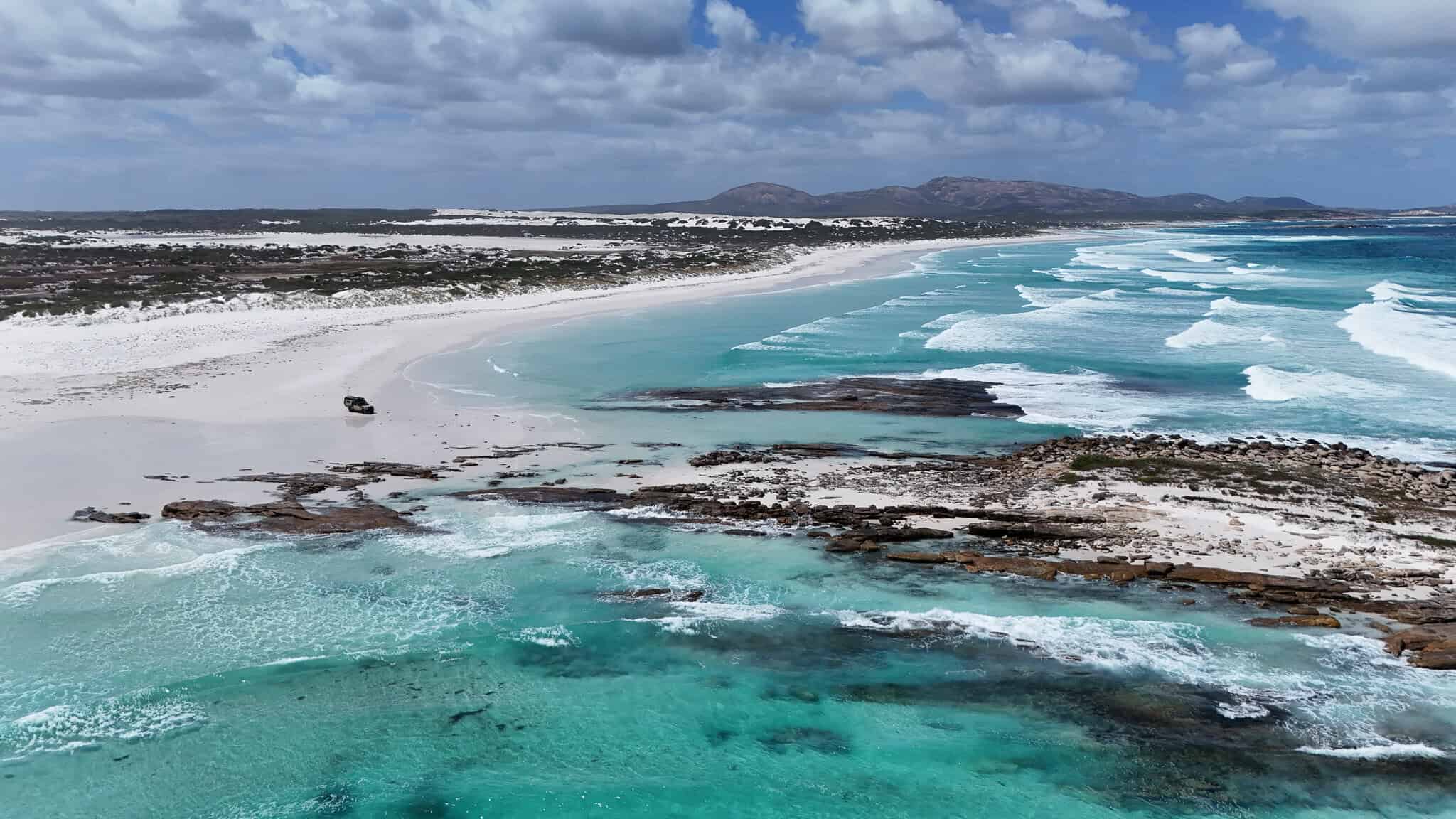
Cape Arid is one of those places that feels truly remote. It’s wild, rugged and incredibly beautiful, with endless white beaches, turquoise water, granite peaks and some of the most untouched coastline we’ve seen in Western Australia.
What surprised us most was how little information we could actually find online before visiting. There were plenty of photos, but not many practical details about the tracks, what to expect, where to camp or whether the drive was actually worth it.
So if you’re currently researching Cape Arid and wondering whether you should make the trip, this guide is for you.
Watch on YouTube
Do you want to see what Cape Arid National Park is really like before you go? We’ll take you along on our journey through this remote corner of Western Australia.
Where is Cape Arid National Park?
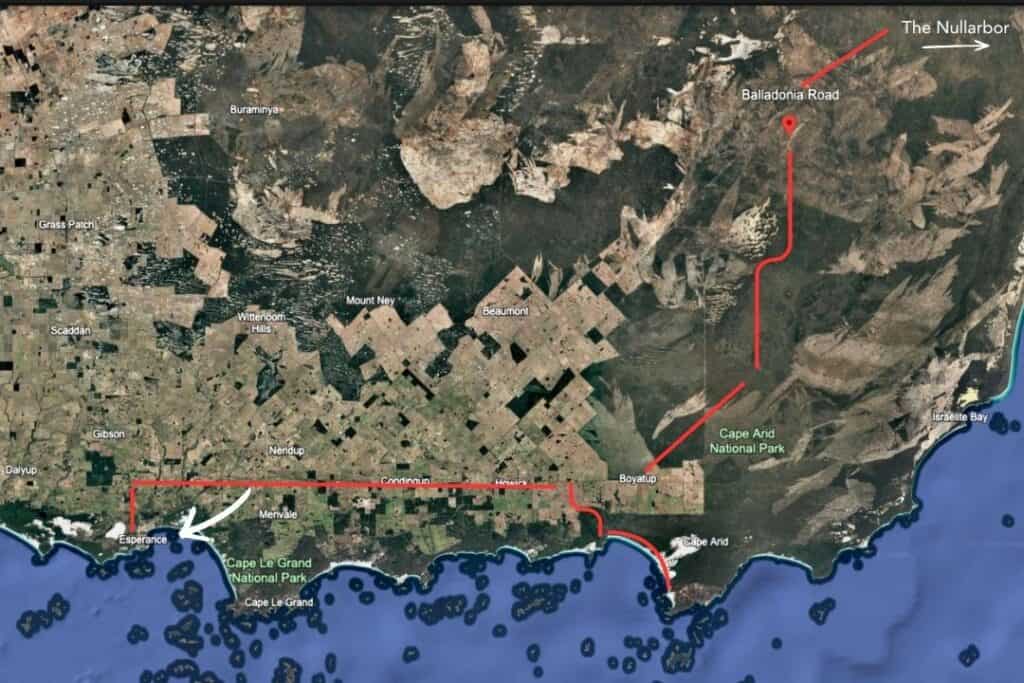
Cape Arid National Park is located around 120 kilometres east of Esperance on the south coast of Western Australia.
Covering more than 280,000 hectares, Cape Arid protects a spectacular stretch of coastline, rugged inland ranges and an incredible diversity of wildlife. The park is home to more than 1,100 plant species, countless bird species and, during the migration season, some incredible whale watching opportunities.
Despite being relatively close to Esperance, Cape Arid feels much more remote than destinations like Lucky Bay or Cape Le Grand National Park. Once you’re out here, you’ll quickly realise you’re a long way from shops, fuel stations and phone reception.
Best time to visit Cape Arid
Cape Arid can be visited year-round, but conditions vary significantly depending on the season.
Spring (September to November) is often considered the best time to visit. Wildflowers are in bloom, temperatures are mild, and whale watching is at their peak.
Summer brings warmer temperatures and longer beach days, but strong winds can sometimes make camping less enjoyable, and bushfire risk is higher.
Autumn is another great time to visit, with generally stable weather and fewer visitors.
Winter can be beautiful, but conditions can change quickly. Rain can affect track conditions, and rough sees may limit some beach access.
Always check the current road and track conditions with WA Parks and Wildlife or at the park entrance.
Why we almost skipped Cape Arid
Cape Arid has been on our Western Australia bucket list for quite some time.
The first time we travelled through Western Australia, it was late April and the weather wasn’t looking great. Instead of exploring the south coast, we headed straight towards Perth and decided we’d come back another time.
Almost a year later, after travelling through the rest of Western Australia, we made it to Esperance and started looking into Cape Arid again. And that’s when the doubt started.
We’d heard plenty of stories about the famous Balladonia Track. Stories about heavy corrugations, overgrown sections and narrow tracks that would leave your vehicle covered in scratches.
To be honest… We nearly gave it a miss.
If it wasn’t for two legends we met at Wharton Beach who convinced us to go, we probably wouldn’t have visited. Looking back now, we’re really glad we did.
Even though we didn’t get to explore every corner of Cape Arid, it was still one of the highlights of our time around Esperance.
Two ways to access Cape Arid
One of the most important things to understand when planning your Cape Arid trip is that there are two main access points.
Coming from the East: The Balladonia Track
If you’re crossing the Nullarbor, you’ll likely come across the Balladonia Track.
This track connects the eastern side of Cape Arid to the Eyre Highway near Balladonia and is a popular route for 4WD travellers.
The Balladonia Track can be heavily corrugated and conditions change constantly depending on weather, maintenance and traffic. There are sections that become narrow with overhanging vegetation, so pinstriping is definitely a possibility.
Before attempting the track, it’s worth checking current conditions with the local visitor centre or Parks and Wildlife office.
The famous Balladonia track is one, which comes down when you cross the Nullarbor.
This is a long, corrugated drive with some narrow sections.
Coming from the West: Esperance
The easiest way to access Cape Arid is from Esperance.
A sealed road takes you all the way to Thomas River Campground, which is probably the main hub for visitors exploring the national park. From there, the adventure really begins.
How to get around in Cape Arid
The best of Cape Arid National Park is 4WD only. Exploring Cape Arid involves a combination of beach driving and inland 4WD tracks. When entering via Thomas River, you’ll quickly realise that tide times are incredibly important.
Beach Driving
Low tide is your best friend in Cape Arid.
Large sections of the coastline are only comfortably accessible during lower tides, and timing your drive correctly can make the difference between an enjoyable day or a stressful one.
But… The beach driving here is absolutely spectacular.
You’ll travel along Yokinup Bay, kilometres of dazzling white sand with crystal-clear turquoise water stretching alongside you. Every time you round a headland, another beautiful beach seems to appear.
Between the beaches are short inland tracks through the dunes that connect different bays and sections of coastline.
You can explore as little or as much as you feel comfortable with, depending on your vehicle, experience level and most importantly: the tides.
4WD Inland Tracks
If you’re planning to reach areas such as Jorndee Creek, Poison Creek or Seal Creek, you’ll likely need to tackle the inland track.
When we visited, the main inland track (Thomas Fishery Track) had recently been closed due to bushfires. We considered the alternative route that Google Maps was showing – Poison Creek Track – but after speaking to a local farmer who had just come through, we decided not to go.
His advice was simple: if he owned our setup, he wouldn’t take it through… The track was extremely narrow with overhanging branches. Scratches and pinstripes were guaranteed to happen.
As much as we wanted to see the eastern side of Cape Arid, we decided to save it for another trip. Sometimes knowing when to turn around and follow your gut feeling is part of good 4WD travel.
2WD Access
While much of Cape Arid is best explored with a 4WD, there are a few areas that can be accessed in a 2WD.
Yokinup Mia Mia campground and Thomas River Campground are both accessible via the sealed road coming from Esperance. If you’d like to visit Dolphin Cove or explore part of the Tagon Coastal Trail, you can also drive to the designated car parks in a 2WD and continue on foot.

Beaches in Cape Arid
One of the things that makes Cape Arid so special is the variety of beaches you’ll find throughout the national park. Some are accessible by 2WD, but the best ones can only be reached by high-clearance 4WD.
While Dolphin Cove and Little Tagon Bay were both beautiful and definitely worth seeing, driving on Yokinup Bay was the real highlight for us. The coastline feels more expansive, the beaches are longer, and it offers that classic Cape Arid experience that many 4WD travellers come here for.
Yokinup Bay
Yokinup Bay is the first beach you’ll drive on when you come from Thomas River Campground. The beach feels endless, and compared to other beaches in Esperance, it’s often incredibly quiet.
This was probably our favourite beach, but to be honest, the further wet ravelled, the better the coastline seemed to get.
Tagon Beach
Tagon Beach can be reached via the Tagon Coastal Trail and offers a completely different experience compared to Yokinup Bay. Surrounded by rugged coastal scenery and native bushland, making it a beautiful stop during the walk.
Little Tagon Bay
Little Tagon Bay is another beautiful beach located along the Tagon Coastal Trail. Unlike some of the beaches accessible by vehicle, getting here requires a bit of effort on foot. It’s a sheltered bay with crystal-clear water.
Dolphin Cove
Dolphin Cove is one of the most picturesque spots along the coastline. The cove is tucked beneath granite headlands and offers stunning views across the Southern Ocean. While you can’t drive directly onto the beach, it’s a rewarding stop for walkers exploring this section of Cape Arid.
Thomas Fishery Cove
Thomas Fishery Cove was one of the beaches we were most looking forward to seeing, but unfortunately, the access track was closed during our visit. However, we could see the beach from the summit of Mount Arid, and it looked absolutely spectacular.
From above, the contract between the bright white sand, turquoise water and rugged coastline was incredible. It made us realise just how much of Cape Arid we still have left to explore.

Camping at Cape Arid
This is a must and the best way to experience Cape Arid.
Western Campgrounds
Yokinup Mia Mia Campground and Thomas River Campground are the most popular campgrounds in Cape Arid and make an excellent base for exploring. Facilities are basic, but the location is fantastic and has easy access to explore the rest of the park.
Eastern Campgrounds
If you’re exploring the east, you’ll find other campgrounds that we would’ve loved to visit, such as:
- Jorndee Creek
- Seal Creek
- Poison Creek
These campgrounds offer an even more remote experience and put you closer to the less-visited section of Cape Arid.
Bookings and fees can change, so always check with WA parks before travelling.

Permits, Park passes & camping fees
Before visiting Cape Arid National Park, you’ll need a valid WA Parks Pass or pay the park entry fee upon arrival.
All campgrounds within Cape Arid National Park are non-bookable and operate on a first-come, first-served basis. This means you won’t be able to reserve a campsite in advance, so it’s worth arriving earlier in the day during busy periods, school holidays and long weekends.
When we visited, camping fees were $15 per person per night (2026 pricing). Camp fees are payable on-site at the campground information hut.
While we try to keep this website and article up to date, fees and pass requirements can change; we recommend checking the WA Parks website before your trip for the latest information.
Things to do in Cape Arid
While beach driving is the main reason people visit Cape Arid, there’s plenty more to see and do.
Beach driving
This is undoubtedly the highlight for most visitors.
The combination of white sand, turquoise water and almost no crowds makes beach driving in Cape Arid feel incredibly special.
Fishing
The coastline offers excellent fishing and spearfishing opportunities. Always check local regulations before fishing.
Whale Watching
Between winter and spring, southern right whales and humpback whales can often be spotted along the coast.
Wildlife Watching
Cape Arid is home to kangaroos, emus, reptiles and an impressive range of birdlife. Early mornings and late afternoons are generally the best times for wildlife spotting.
Hike Mount Arid
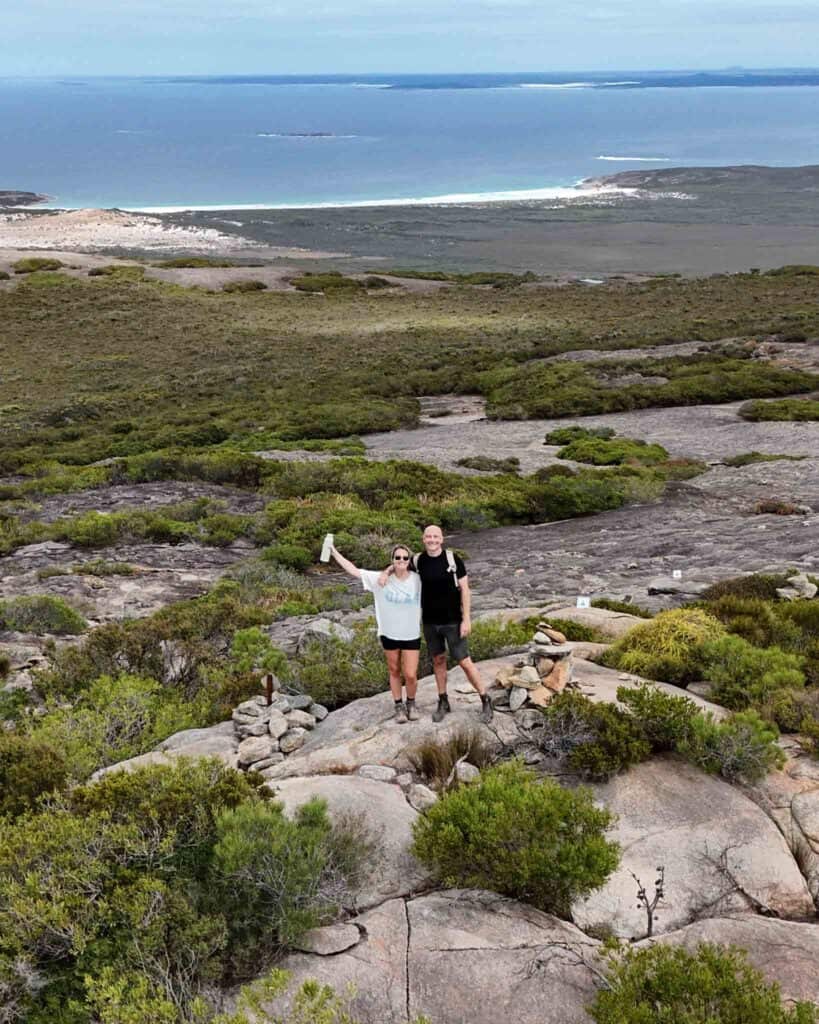
One of the highlights of our trip was hiking Mount Arid. And to be honest, we underestimated it. The 4km grade 5 return hike takes about 2,5 to 3,5 hours.
The views from the summit are absolutely incredible, with a panoramic view over the coastline, beaches and wilderness of Cape Arid National Park.
Finding the start of the 4WD track that leads to the Mount Arid hiking trail turned out to be harder than expected. Google Maps doesn’t accurately show the access track, and from the beach, the white markers blend into the surrounding (white) dunes surprisingly well.
To save you time and frustration, here are the coordinates:
Mount Arid 4WD Track Entrance Point: 33°58’49.4″S 123°10’04.3″E
If you’re planning on doing the hike, bring enough water and try to plan it early in the morning.
Walk the Tagon Coastal Trail
While most people visit Cape Arid for the beach driving, there’s a walk in the national park that’s very popular: the Tagon Coastal Trail.
This 14km return walk starts near Thomas River and takes you past some of the most beautiful coastal scenery in Cape Arid, such as Dolphin Cove, Little Tagon Bay and Tagon Beach. The trail winds through coastal heath, over granite headlands and along stretches of pristine beaches.
Know before you go
Cape Arid is remote and requires a bit more planning than some of the popular parks around Esperance.
Fuel
There’s no fuel available within Cape Arid National Park. Make sure you have enough fuel to cover the beach driving, inland tracks, and any detours.
Food and Water
There are no shops inside Cape Arid National Park. Bring everything you need, including drinking water, food and any essentials.
Phone Reception
Phone reception was limited in some parts of Cape Arid.
Check the tide times
You can only explore the beaches at low tide. Check the tide times before heading out.
Recover Gear
When driving on the beach, always carry recovery gear such as Maxtrax, and know how to use it. Tyre pressure makes a huge difference in soft sand.
4WD insurance
If you’re planning to explore Cape Arid, it’s worth taking a moment to review your insurance before you go. Remote travel often means beach driving, corrugated roads and limited services if something goes wrong.
We’ve been travelling Australia for several years and personally use Club 4X4 for our touring setup. It’s always worth doing your own research and choosing a policy that suits your vehicle and travel style.

Is Cape Arid worth visiting?
Absolutely.
Cape Arid isn’t as easy to access as some of the other beaches in Esperance. And that’s what makes it special.
The beaches in Cape Arid are just spectacular. The scenery is incredibly diverse and the sense of remoteness is something that’s becoming harder to find.
What we loved most about Cape Arid was the sense of isolation. It feels like one of the last truly remote coastal destinations in southern Western Australia.
If you are already travelling to Esperance, and you are in a 4WD, we’d absolutely recommend adding Cape Arid to your itinerary.
FAQs about Cape Arid
Do you need a 4WD for cape Arid?
You can access Thomas River Campground via a sealed road from Esperance. A 4WD is required if you want to explore the beaches, inland tracks and more remote areas of Cape Arid National Park.
How far is Cape Arid from Esperance?
Cape Arid National Park is located approximately 120 kilometres from Esperance. The drive to Thomas River Campground takes around 1.5 hours.
Can you camp in Cape Arid National Park?
Yes. Cape Arid has several campgrounds such as Thomas River Campground, Seal Creek, Poison Creek and Jorndee Creek. Facilities are basic, so come prepared.
How many days do you need in Cape Arid?
We’d recommend at least two to three days. This allows you enough time to explore the beaches, hike Mount Arid and enjoy camping without feeling rushed.
The content on Bush and Bay is based on our personal experiences and opinions. While we strive to provide accurate, up-to-date information, travel conditions and recommendations may change over time. We do not take responsibility for any decisions or actions made based on our content. Always conduct your own research and consult with professionals where necessary. Bush and Bay may earn a small commission from affiliate links, but this does not influence our reviews or recommendations. We only endorse products and places we have personally tested and believe in.
Testimonials do not contain any financial product advice and are based on the individual’s circumstances. Issued by Club 4X4 Pty Ltd as an AR of Lifestyle Insurance Group who is acting (under its own AFSL) on behalf of the insurer QBE Australia Limited. Excesses, limits and exclusions apply. Always read the PDS & TMD at club4X4.com.au.
