

Guide to Cape Le Grand National Park 2026: Know before you go

If you’re planning a trip to Esperance, Western Australia, there’s one place you absolutely shouldn’t miss: Cape Le Grand National Park.
Located less than an hour from town, Cape Le Grand National Park is home to some of the most beautiful beaches we’ve seen anywhere in Australia. Think turquoise water, white sand, granite peaks and secluded bays that look like they’ve been pulled straight from a postcard.
It’s also home to Lucky Bay, one of Australia’s most famous beaches. But there’s more to this national park than just beaches.
We spent an entire week exploring Cape Le Grand National Park and quickly realised it’s not somewhere you just drive through for a quick look. Between the hiking trails, beach drives, beautiful coves and epic campgrounds, this place deserves at least a few days on your Esperance itinerary.
In this guide, we’ll share everything you need to know before visiting Cape Le Grand National Park, including the best things to do, where to camp, when to visit and our favourite spots throughout the park.
➤ If you’re planning a trip to Esperance, make sure you start with our guide to the best Beaches in Esperance to start planning your trip.
Where is Cape Le Grand National Park?
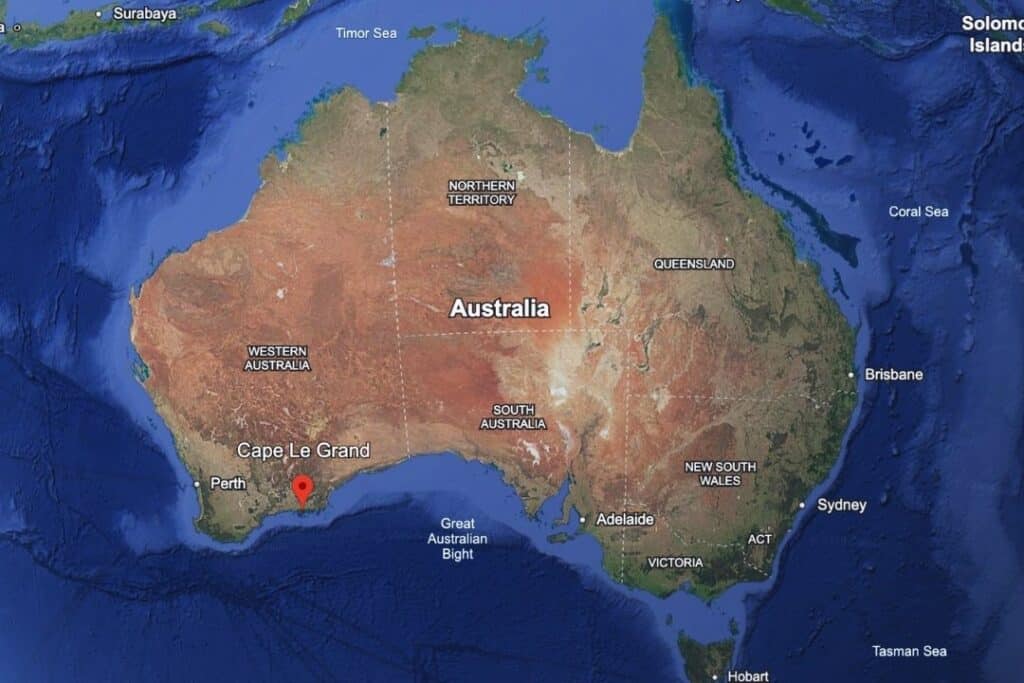
Cape Le Grand National Park is located approximately 60 kilometres east of Esperance in Western Australia. The drive takes around 45 minutes and follows a sealed road all the way into the mark, making it easily accessible for both day visitors and campers.
What surprised us was how quickly the landscape changes. One moment you’re driving through farmland, and suddenly you’re looking out over some of the most stunning coastline in the country.
It’s hard to believe somewhere this beautiful is so close to a town.
A brief history of Cape Le Grand National Park
Long before becoming one of Western Australia’s most popular national parks, this area was home to the Wudjari People of the Noongar Nation, who have deep cultural connection to the land.
One of the park’s most recognisable landmarks is Frenchman Peak, known as Mandooboornup by Traditional Owners.
The park itself takes its name from Le Grand, one of the officers aboard L’Esperance during the 1782 French expedition led by Bruni d’Entrecasteaux along Australia’s southern coastline.
Today, Cape le Grand National Park protects more than 31,000 hectares of coastal wilderness, including granite headlands, pristine beaches and native bushland.
Do you need a permit to visit Cape Le Grand?
Yes. As Cape Le Grand National Park is managed by WA Parks and Wildlife, visitors need either a valid WA National Parks pass or must pay the daily park entry fee.
If you’re planning on camping, you’ll also need a separate camping booking.
We highly recommend organising both before arriving, particularly during peak season when campgrounds book out months in advance.
Best time to visit Cape le Grand
The best time to visit Cape Le Grand National Park is generally between November and April.
During these months you’ll enjoy warmer temperatures and ideal beach weather, making it perfect for swimming, hiking and spending time outdoors.
But… One thing we learned around Esperance is that wind can completely change your experience.
A calm day in Cape Le Grand is absolutely magical. A windy day can be a very different story. Before visiting, we always recommend checking both the weather forecast and wind conditions.
December and January are the busiest months due to school holidays, so expect larger crowds and make sure to secure accommodation well in advance.
Camping in Cape Le Grand
One of the best ways to experience Cape le Grand national park is by staying overnight. If you can secure a booking here, it’s absolutely worth it!
The park has two campgrounds, both located just steps from some of the region’s most spectacular beaches.
Lucky Bay Campground
Lucky Bay Campground is by far the most popular camping area in the park. Located just behind the famous beach, it has flushing toilets and hot showers, and is close to the beach and walking trails.
We stayed here for five nights and loved being able to walk down to the beach each morning before the day visitors arrived.

Le Grand Beach campground
Le Grand Beach campground is lesser known, but it’s also a great option. It has direct access to Le Grand Beach which we found less crowded than Lucky Bay and also very similar.
In our opinion, Le Grand beach felt a bit like a hidden gem of Cape Le Grand National Park. It often gets overlooked because of Lucky Bay’s popularity.
Both campgrounds book incredibly quickly, particularly during school holidays and peak travel periods. If you really want to stay here, book it as soon as reservations open six months in advance.
➤ For more camping options around the region, check out our complete Esperance camping guide.
The best things to do in Cape Le Grand National Park
Lucky Bay
No visit to Cape Le Grand National Park would be complete without seeing Lucky Bay.
The bright turquoise water, squeaky white sand and famous kangaroos make this one of Australia’s most iconic beaches. But, it comes with a crowd.
➤ For everything you need to know, such as camping, beach driving, and more, read our complete guide to Lucky Bay.

Climb Frenchman Peak
Frenchman peak is one of the most recognisable landmarks in Cape Le Grand National Park.
Rising 262 metres above sea level, this granite peak dominates the surrounding landscape and offers some of the best views in the region.
The walk to the summit is only around three kilometres return, but don’t let the distance fool you. The final section becomes steep and involves some scrambling across smooth granite rock.
But the effort is absolutely worth it. From the top, you’ll enjoy panoramic views over the coastline and bushland.
One of the most unique features of Frenchman peak is the large cave-like opening near the summit. It creates an incredible natural window overlooking the park.

Thistle Cove
Thistle Cove was one of the biggest surprises during our visit. Many people drive straight past on their way to Lucky Bay, but we think it’s a mistake.
This beautiful cove features crystal-clear water, granite boulders, and one of the park’s most famous natural attractions: Whistling Rock.

Hellfire Bay
Hellfire Bay is after Lucky Bay the second favourite beach in Cape Le Grand. Protected by granite headlands, the water here is often calmer than some of the surrounding beaches. There’s a large carpark, picnic tables, barbecues and toilets. It’s a great place to relax for a few hours.
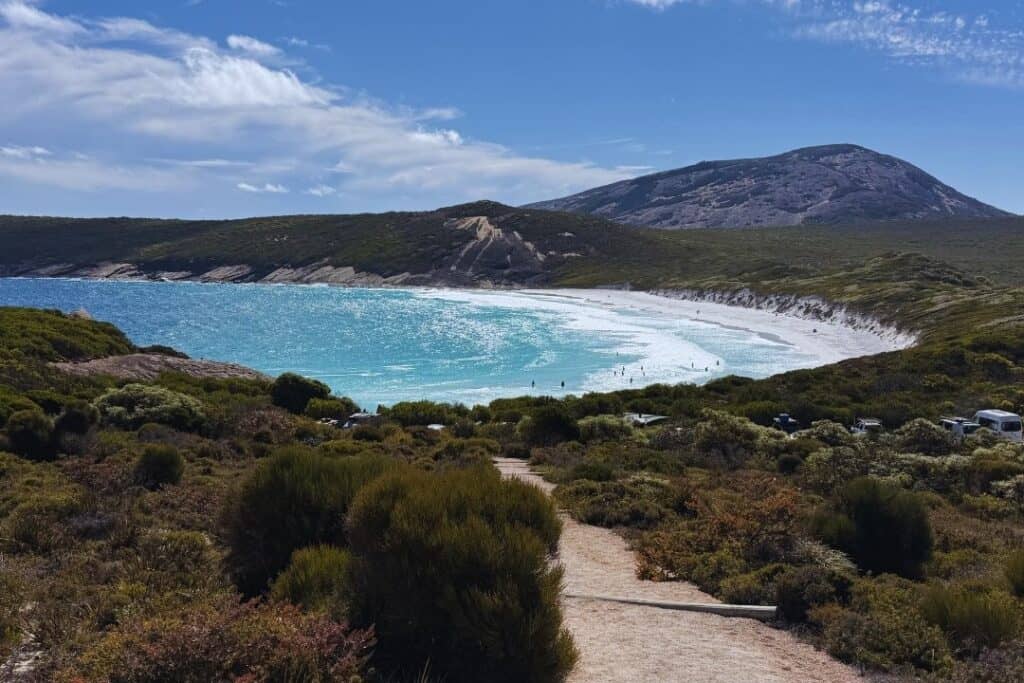
Walk to little Hellfire Bay
Only a 30-minute walk from Hellfire Bay you’ll find Little Hellfire Bay. Due to the walk, it seems to attract far fewer visitors. The walk down to Little Hellfire bay goes through beautiful bushland and will bring you to another stunning stretch of white sand and turquoise water.
If you’re looking to escape the crowds, this is probably the best spot in the national park.
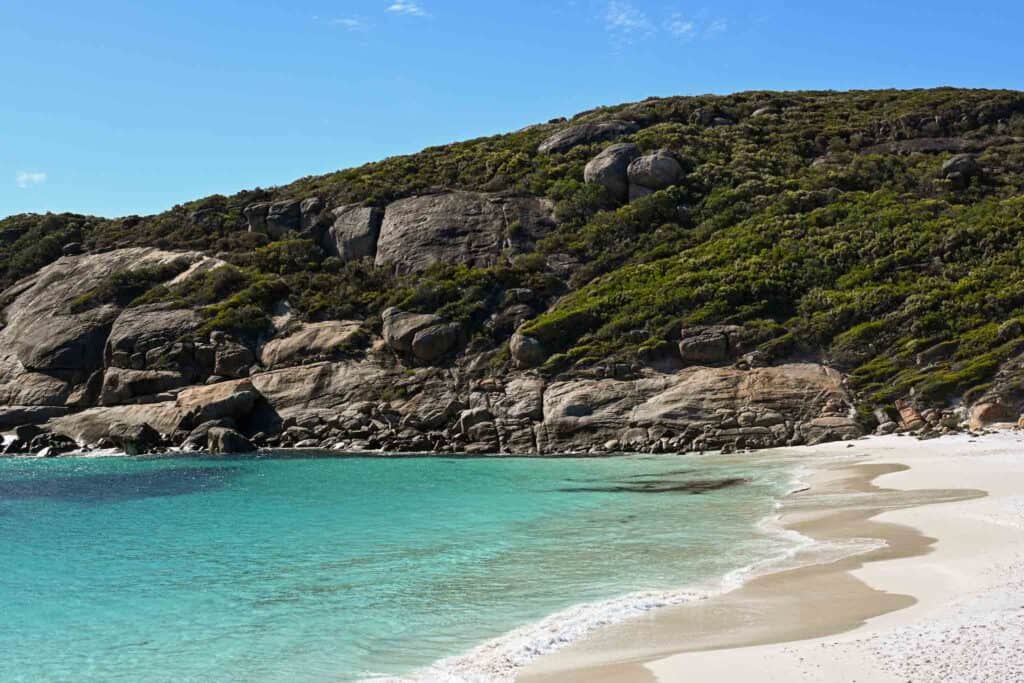
Drive from Le Grand Beach to Esperance
Le Grand beach was one of our favourite places in Cape Le Grand.
At first, it looks pretty similar to Lucky Bay, with the same white sand and turquoise water. But it felt much quieter.
From here, you can drive all the way to Esperance, which will only take 20 minutes instead of the 45 minutes on the sealed road.
We visited Cape Le Grand beach multiple times, just to set up for the day and enjoy the serenity.

Dunn Rocks
If you have a 4WD and don’t mind venturing a little further and endure some corrugations, Dunn Rocks is worth exploring.
The track can be rough in places, which keeps visitor numbers low compared to the main section of Cape Le Grand.
Be aware that this part of the coastline is more exposed and strong winds can make the experience less enjoyable. But when it’s not windy, the scenery here is absolutely spectacular.
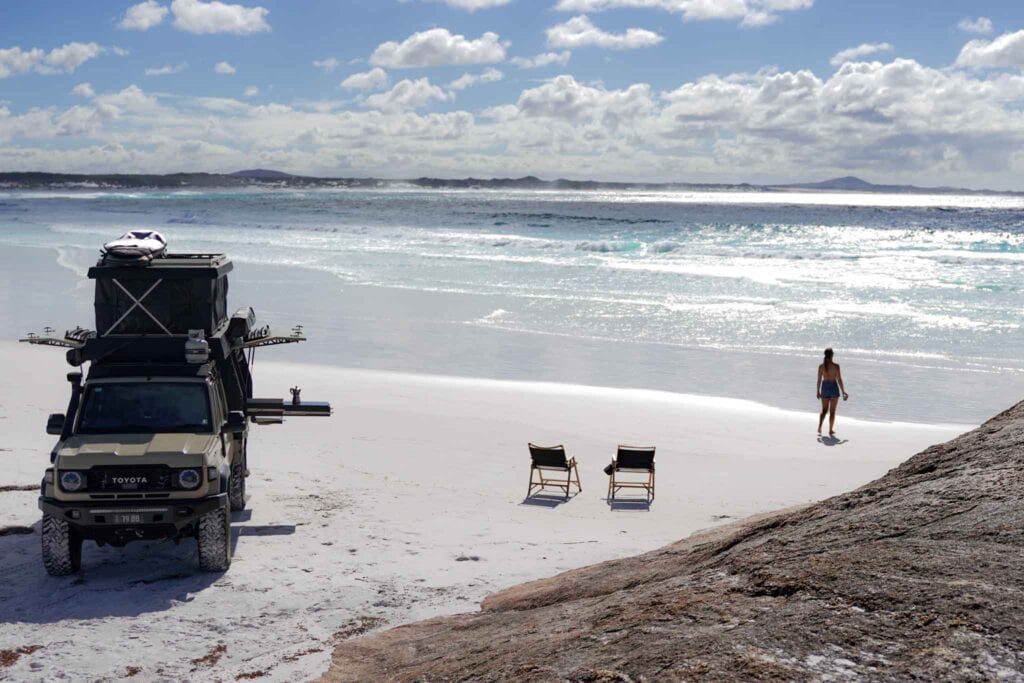
Is Cape Le Grand National Park worth visiting?
Absolutely! Cape Le Grand is easily one of the highlights when it comes to visiting Esperance.
The combination of world-class beaches, scenic hikes, coastal drives and epic campgrounds makes it one of our favourite national parks in Western Australia.
Most visitors come just for Lucky Bay, but we think the real magic of Cape Le Grand National Park is found in the quieter corners.
Give yourself at least two to three days here if you can. You won’t regret it.
Plan your trip to Esperance
If you’re planning your trip to Esperance, start with our complete guide to the best Beaches in Esperance. And for more detailed information, read through our other travel and camping guides about:
FAQs for Cape Le Grand
How much time do you need in Cape Le Grand national Park?
We recommend spending at least two to three days in Cape Le Grand National Park. This gives you the time to visit Lucky Bay, climb Frenchman Peak, explore Hellfire Bay and Thistle Cove.
Do you need a 4WD for cape le grand national park?
Most of Cape Le Grand National Park is accessible with a 2WD. The main attractions, such as Lucky Bay, Hellfire Bay, and Frenchman Peak, can be reached via sealed roads. A 4WD is only required if you plan to drive on the beaches or visit beaches such as Dunn Rocks.
Can you visit Cape Le Grand National Park as a day trip from Esperance?
Yes. Cape Le Grand National Park is an easy day trip from Esperance. But if you can, we’d highly recommend staying overnight to experience the beaches before and after the day-trippers arrive.
When is the best time to visit Cape Le Grand National Park?
The best time to visit Cape Le Grand National Park is between November and April, when the weather is warmer and ideal for beach activities. Always check the wind forecasts, as strong winds will affect your experience.
The content on Bush and Bay is based on our personal experiences and opinions. While we strive to provide accurate, up-to-date information, travel conditions and recommendations may change over time. We do not take responsibility for any decisions or actions made based on our content. Always conduct your own research and consult with professionals where necessary. Bush and Bay may earn a small commission from affiliate links, but this does not influence our reviews or recommendations. We only endorse products and places we have personally tested and believe in.
